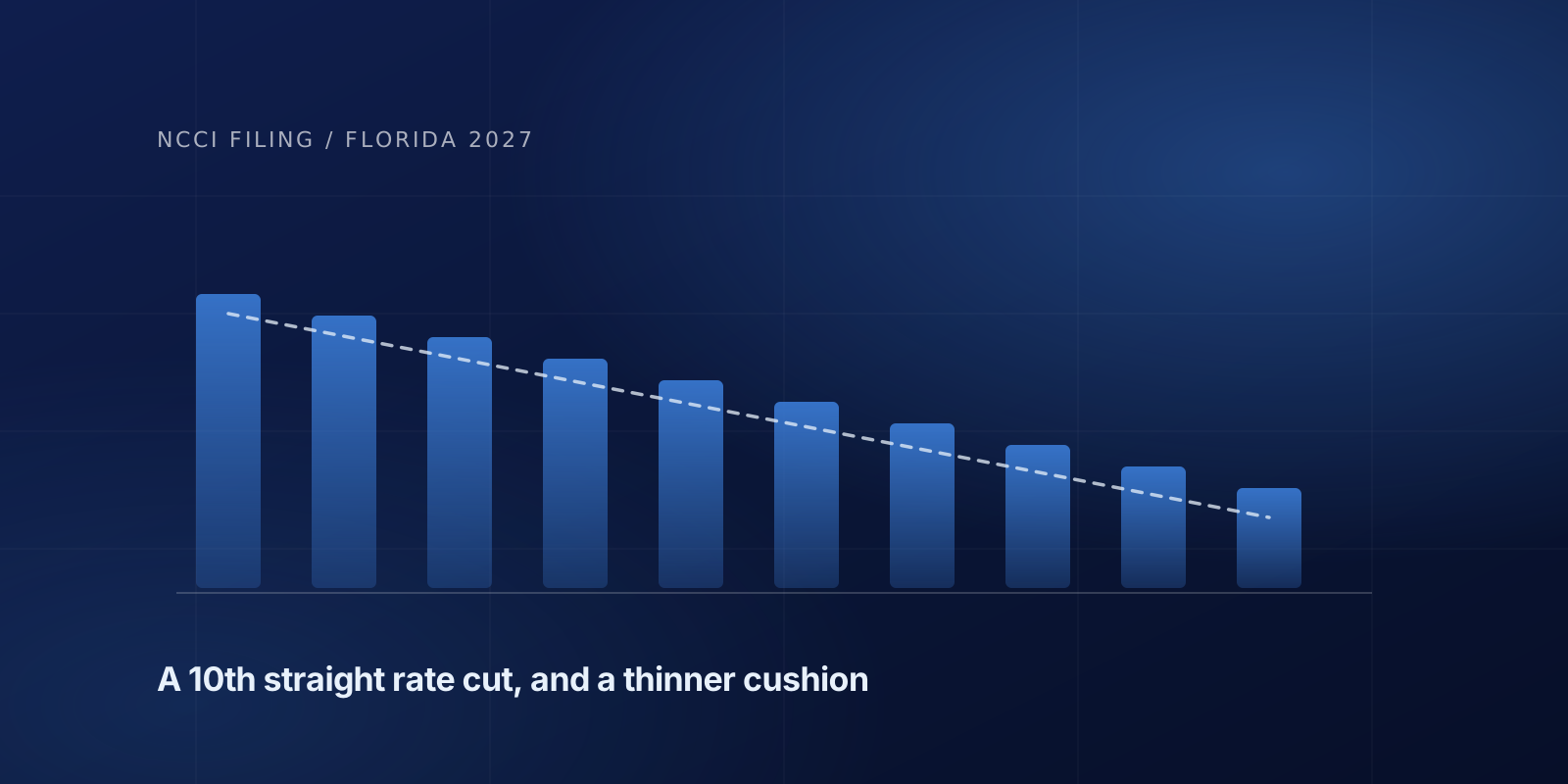
NCCI has recommended that Florida workers' compensation rates drop an average of 7.4% starting January 1, 2027. If regulators approve it, that's ten consecutive years of decreases for Florida employers.
Worth saying clearly: this is a filing, not a done deal. NCCI's number is a recommendation, and Florida's Office of Insurance Regulation can approve it, modify it, or send it back. But a decade-long trend rarely reverses at the filing stage.
Ten years is not a blip
One rate cut is a market cycle. Ten in a row is a structural change in how much workers' compensation costs to write in a state.
The mechanics behind it are familiar to anyone who has watched this line since the mid-2010s: workplace injuries keep declining, and the loss costs underlying the rate keep coming down with them. Florida has been near the front of that trend rather than an exception to it.
What makes the current filing interesting isn't the direction. It's the timing. The same period that produced this reduction also produced NCCI's 2026 State of the Line finding that medical and indemnity claim severity both rose 4% in 2025. Rates are falling while the cost of an individual claim is rising.
Those two facts aren't contradictory — fewer claims at a higher average cost can still net out to a lower rate — but they do point in different directions over time. Frequency declines have a floor. Severity increases don't obviously have a ceiling.
What a falling rate does to premium accuracy
Here's the part that gets missed when a rate cut is announced.
Premium is rate times payroll. When the rate goes down, every dollar of payroll you get wrong carries a smaller premium consequence per dollar, which sounds like it makes accuracy less important. It does the opposite.
Falling rates compress margins. A carrier writing at a rate 7.4% lower than last year is working with less room between premium collected and losses paid. In that environment, systematic under-capture of exposure at audit stops being a rounding error and starts being the difference between a profitable book and a marginal one.
Put another way: when rates were high, sloppy exposure capture was expensive but survivable. After ten straight cuts, the premium base is the thing carrying the book, and the premium base is set at audit.
Where the leakage actually lives
Exposure that goes uncaptured tends to come from the same handful of places:
Uninsured subcontractors treated as vendors rather than payroll. Employees whose actual duties don't match the class code on the policy. Payroll reported net of items that belong in the audit basis. Businesses that added a location or a service line mid-term and never told anyone.
None of these are exotic. They're the ordinary consequence of a policy written on estimates twelve months before anyone knows what the year looked like. They're also why the audit exists.
For carriers writing Florida risks
Three practical things follow from a 7.4% reduction.
Renewal premium will look lower even where exposure grew, which makes year-over-year premium a bad proxy for whether a risk got bigger. Payroll is the signal, not premium.
Audit turnaround matters more when rates are moving, because a slow audit means underwriting is making renewal decisions on stale exposure data during a period when the rate itself is changing underneath them.
And classification review earns more than it used to. When the rate differential between two class codes shrinks along with the overall rate level, the absolute dollars still add up across a book of any size — and misclassification compounds year over year until someone catches it.
The bottom line
Florida employers are getting a tenth consecutive break, and that's genuinely good news for the businesses paying the bill. For the carriers writing it, a decade of rate reductions means the premium that comes in the door is doing more work with less cushion behind it.
That puts the audit — the one place where estimated payroll becomes actual payroll — closer to the center of underwriting results than it has been in years.
Florida's Office of Insurance Regulation has the final word, and the 7.4% can still move before January. The decade-long trend behind it is the part that isn't really in question.