A workers comp class code lookup is only right for one state on one date
A workers comp class code lookup is right for one state on one date only. Which bureau governs yours, and the Texas code changes landing July 1, 2027.
Practical guidance for carriers, brokers, and policyholders, from our team of audit specialists.
A step-by-step walkthrough of a workers' compensation audit, from the day it lands to the final report, and exactly what your auditor needs from you.
A workers comp class code lookup is right for one state on one date only. Which bureau governs yours, and the Texas code changes landing July 1, 2027.
A workers comp certificate of insurance proves what the insurer said on one day. A 2026 Pennsylvania ruling tested whether the disclaimer undoes that.
Premium audit is the only place a 4.8% payroll increase reaches a flat book. What NCCI's 2026 State of the Line implies for audit accuracy and timing.
A workers comp ghost policy reports no employee payroll and exists to produce a certificate. What the audit charges, and who pays, when payroll turns up.
A workers comp exemption is a filing, not a default. Who can elect one, how long it lasts, and why the final audit is where a bad one gets undone.
A published California ruling on workers comp audit cancellation: silence on payroll record requests voided coverage, and an injured worker's claim was denied.
Workers comp estimated payroll now sets the premium a soft rate no longer can. Why stale exposure estimates push a whole book's premium into the audit.
The restaurant workers comp class code changes July 1, 2027. Code 9079 splits into 9082, 9083, and 9084, and the audit decides which one you land in.
Workers comp premium fraud is a payroll reporting crime. Two September 2026 prosecutions show the gap between reported and actual payroll at audit.
Your workers comp experience modifier is built on audited payroll. How that figure reaches the rating bureau, and why it then gets priced three times.
The workers comp class code for remote employees is 8871, live July 1, 2026 in Texas. What qualifies, the 50% rule, and the records an audit wants.

Workers comp subcontractor rules decide the audit bill: you pay for any sub who cannot prove their own coverage. What an auditor checks, and what it costs.
The NCCI legislative and regulatory trends report tracked 1,102 bills in 2026. The classification shift inside it lands on the premium audit file.
Workers comp rates for 2027 fall in New Hampshire and Wyoming and rise in Oregon and Washington. What that split changes about your final audit bill.
A workers comp class code in California can split on hourly wage. The dual wage thresholds rose September 1, 2026, and each is verified at final audit.
How to dispute a workers comp audit: what can be challenged, the documentation a carrier owes you, the payment deadline, and where to escalate an appeal.
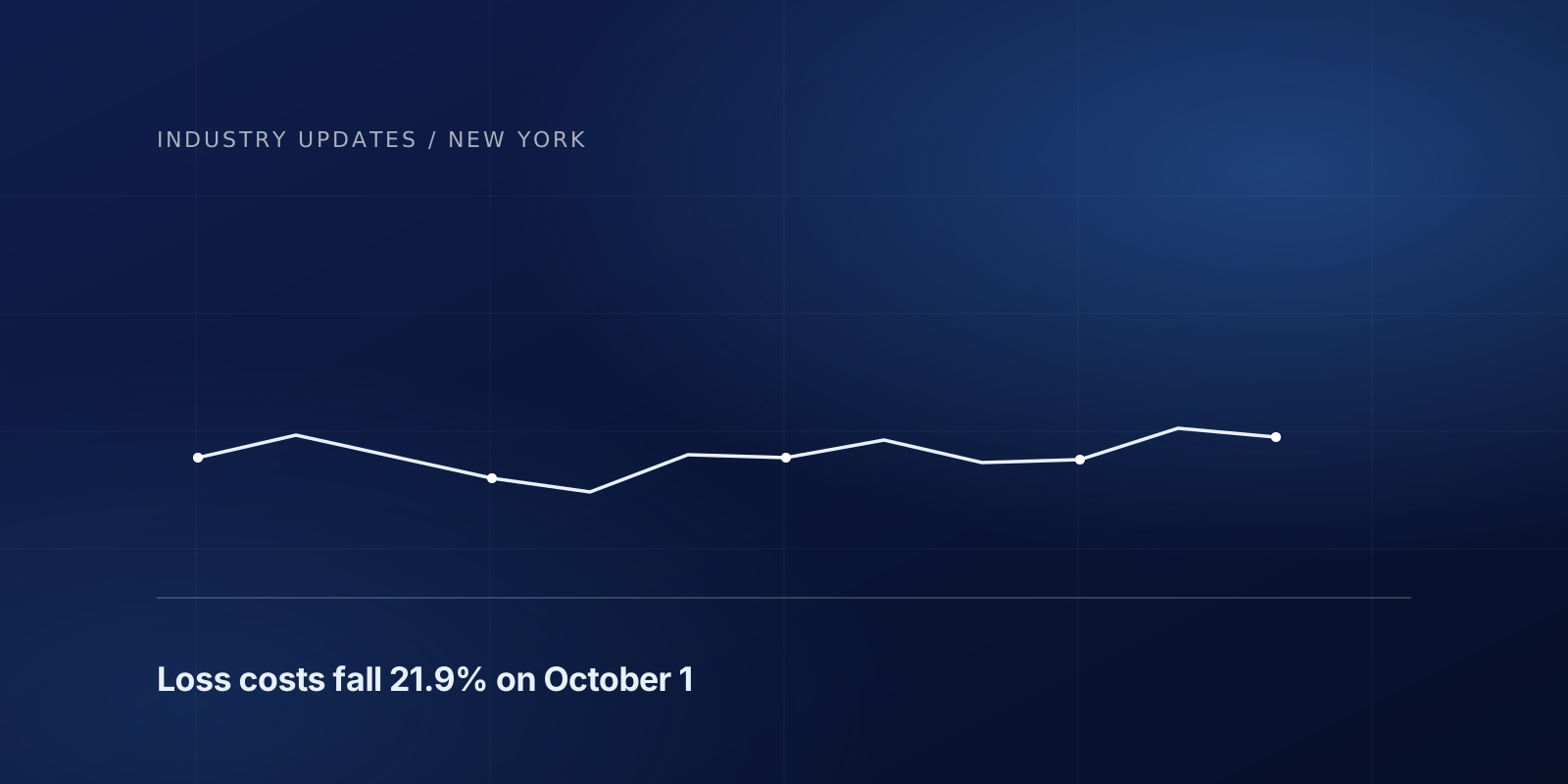
New York workers comp rates change October 1, 2026 as loss costs drop 21.9%. What the class-level numbers and revised payroll rules mean at audit.
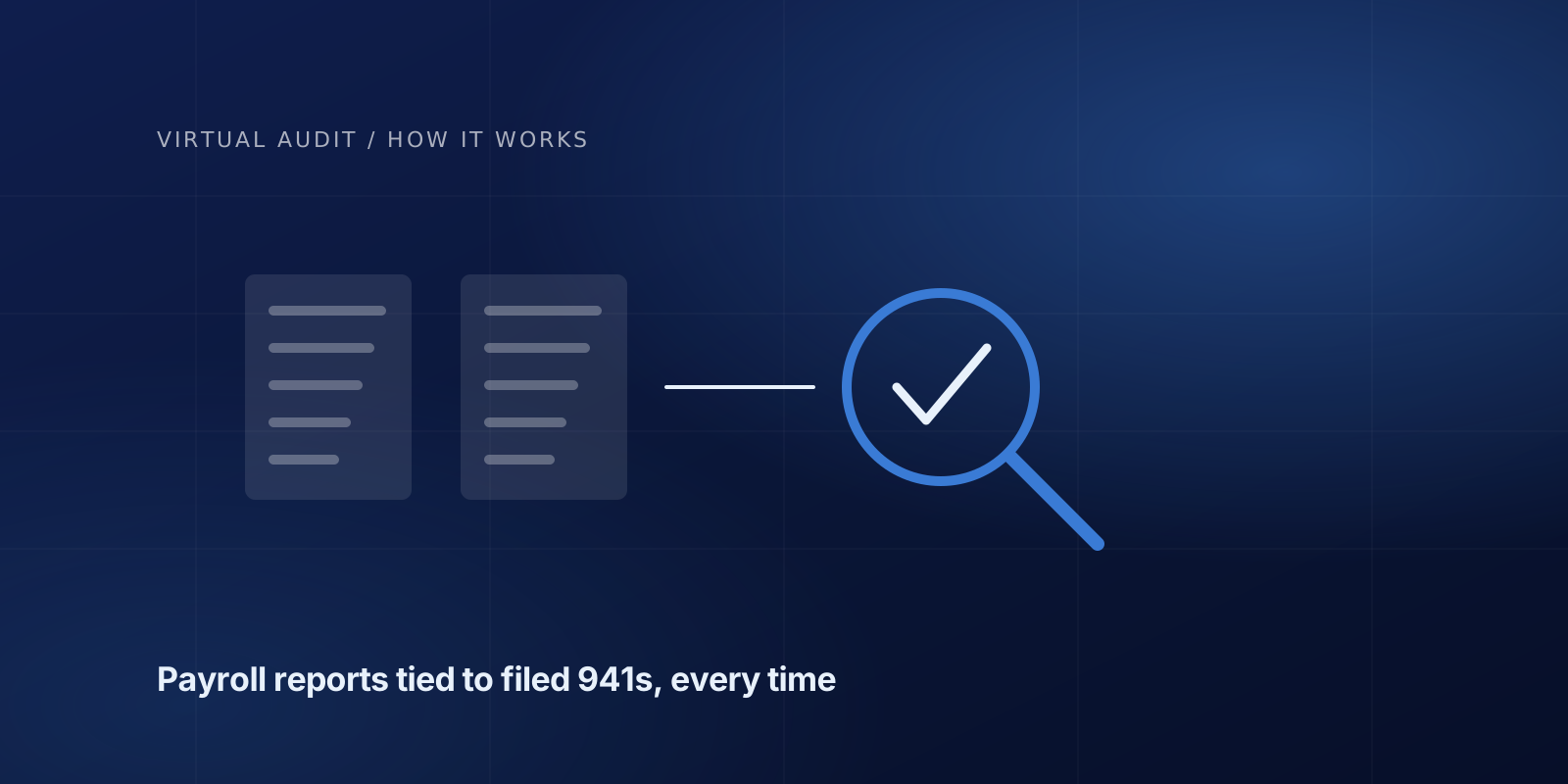
What a virtual workers' compensation premium audit involves, how it differs from physical and telephone audits, and when an on-site visit is still better.
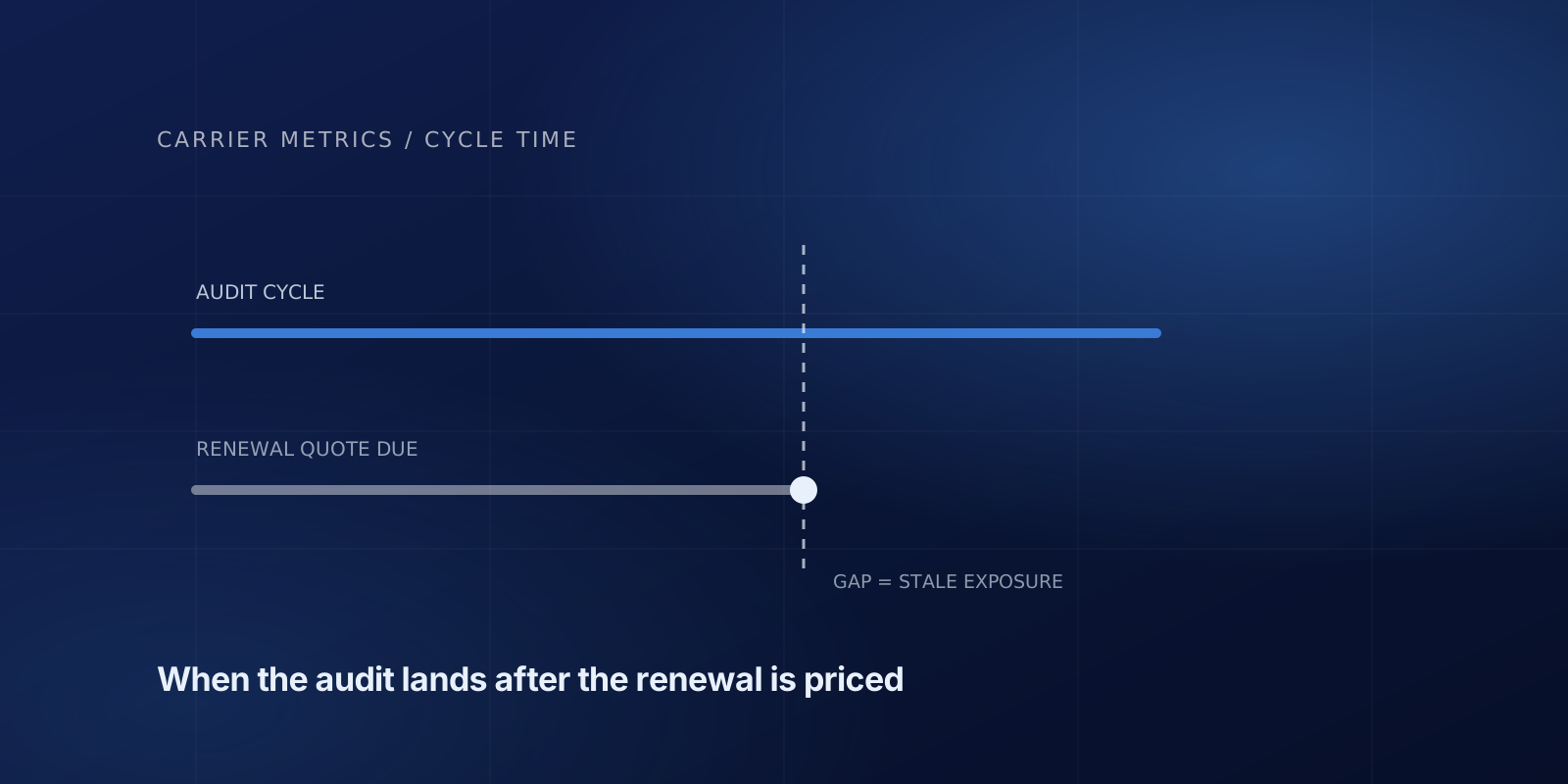
Premium audit cycle time drives renewal accuracy, collections, and disputes. Why carriers should measure audit turnaround as an underwriting metric.
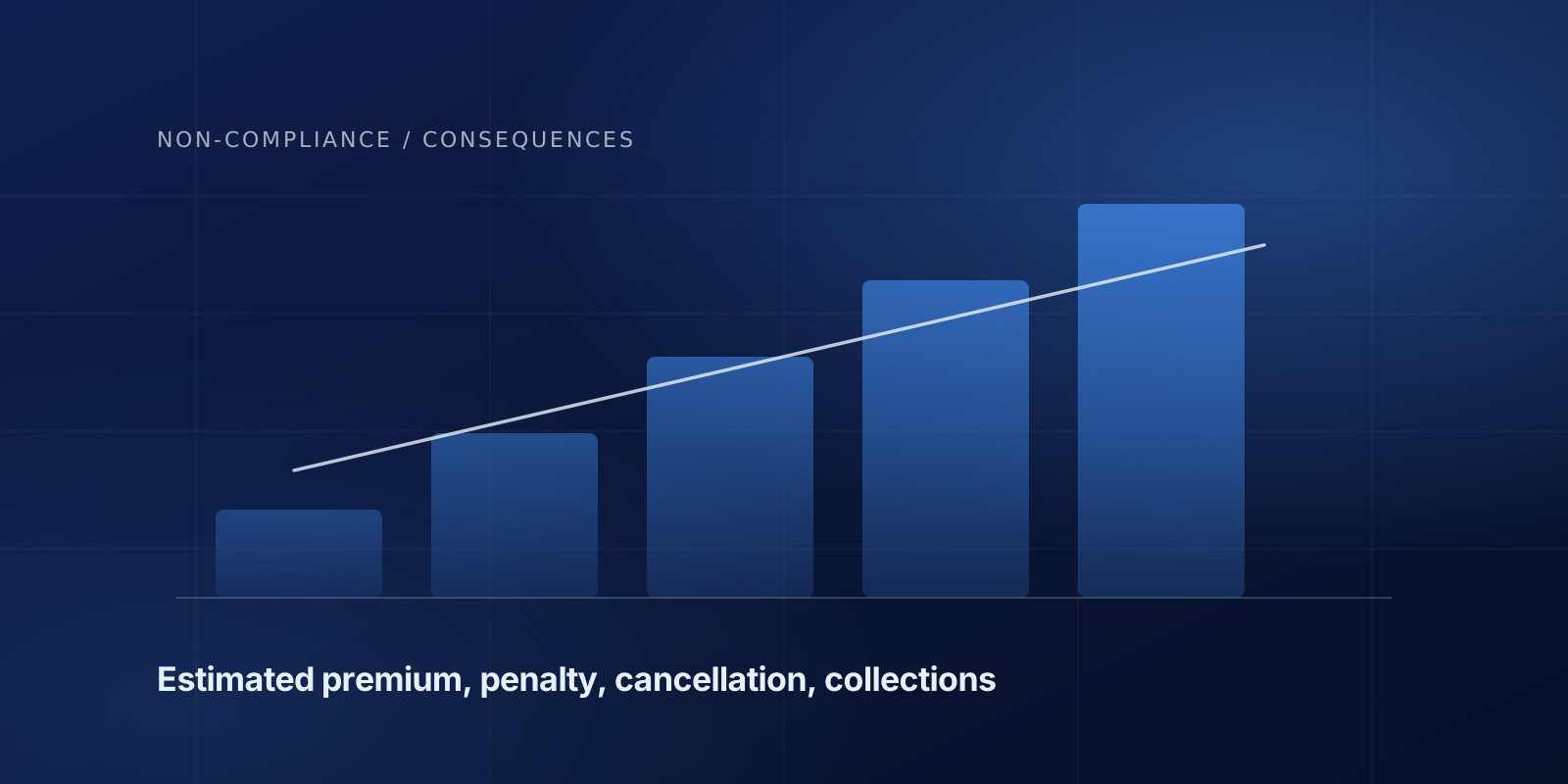
Workers comp audit penalties escalate: estimated premium, a non-compliance charge, cancellation, then renewal trouble. The sequence, and where it stops.
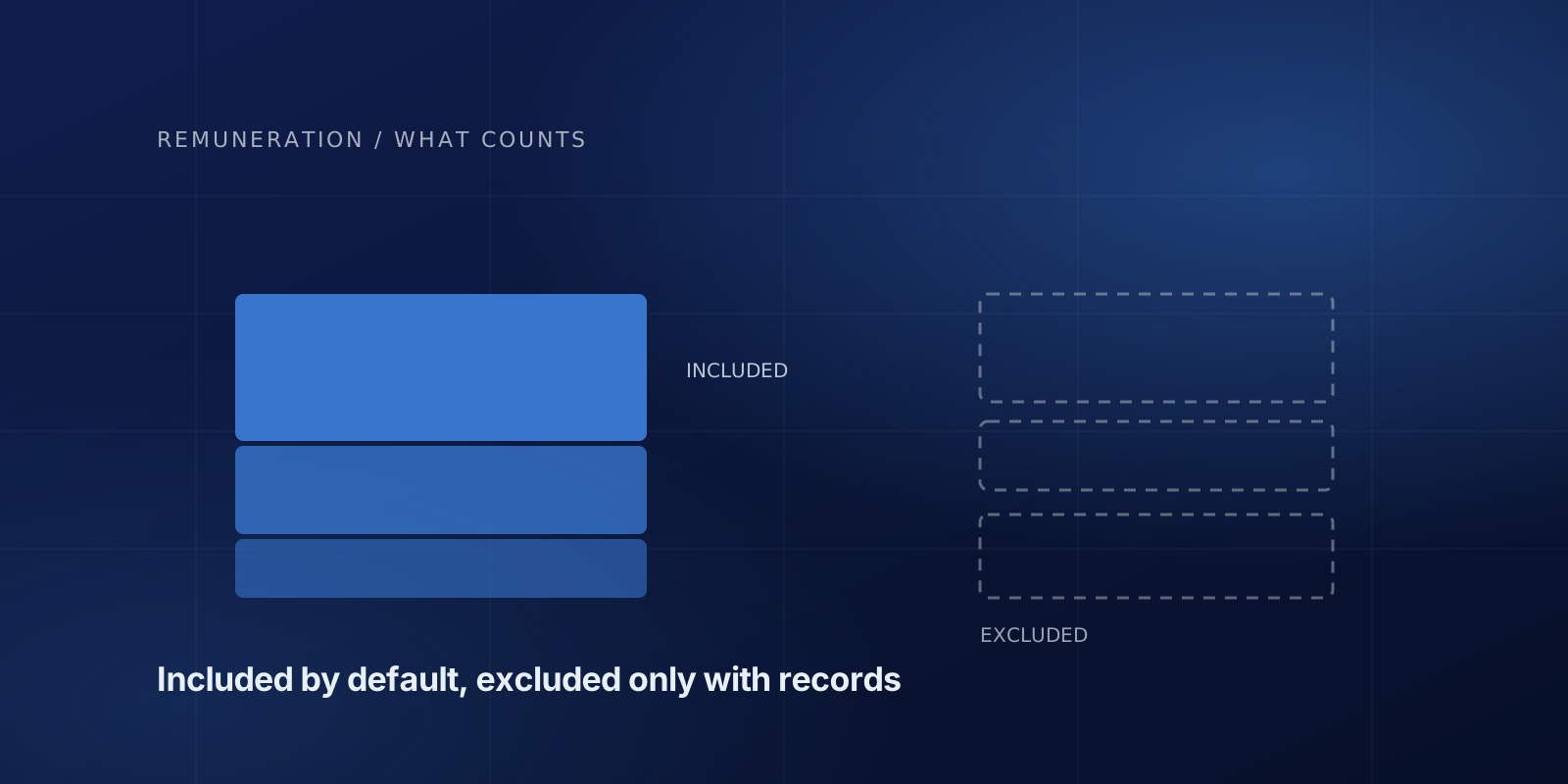
Which wages count toward workers' compensation premium: overtime, bonuses, owner pay, per diem, and the exclusions employers most often miss at audit.
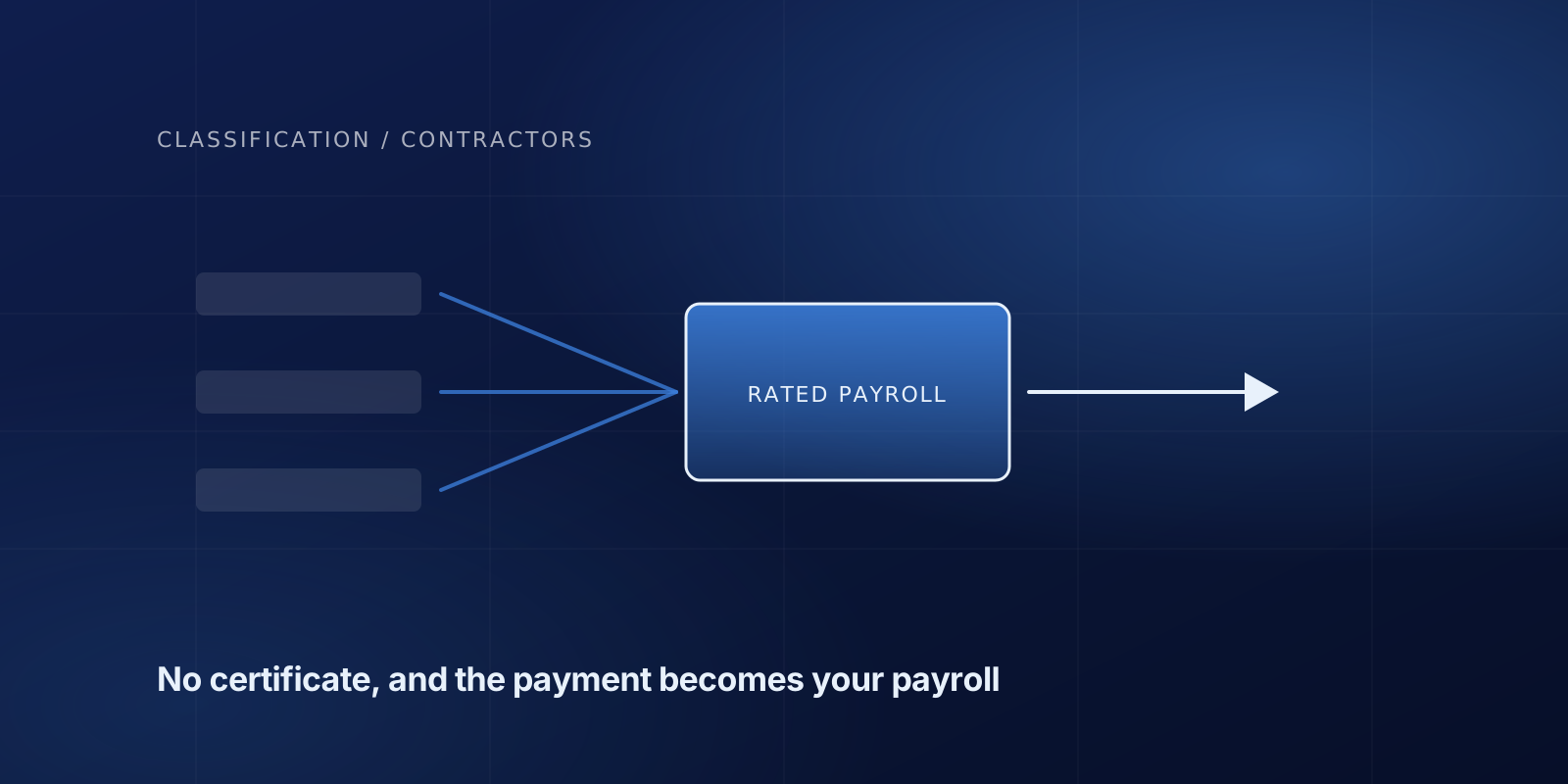
Paying someone on a 1099 does not settle workers comp. Why contractor payroll lands back on your audit, and the records that keep it off the bill.
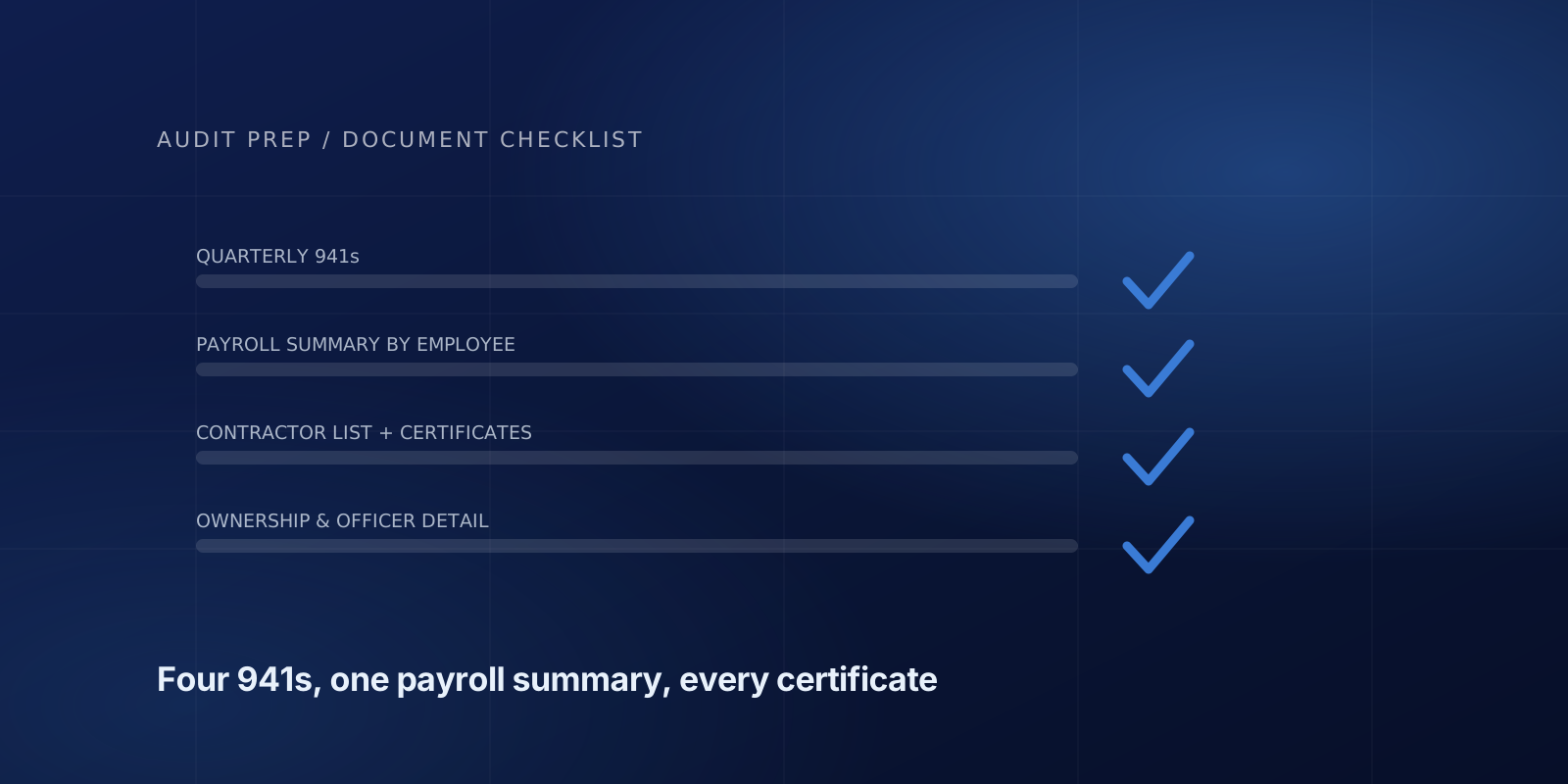
A practical workers' compensation audit checklist: the documents to gather, how to pull them from ADP or QuickBooks, and the records that cause delays.
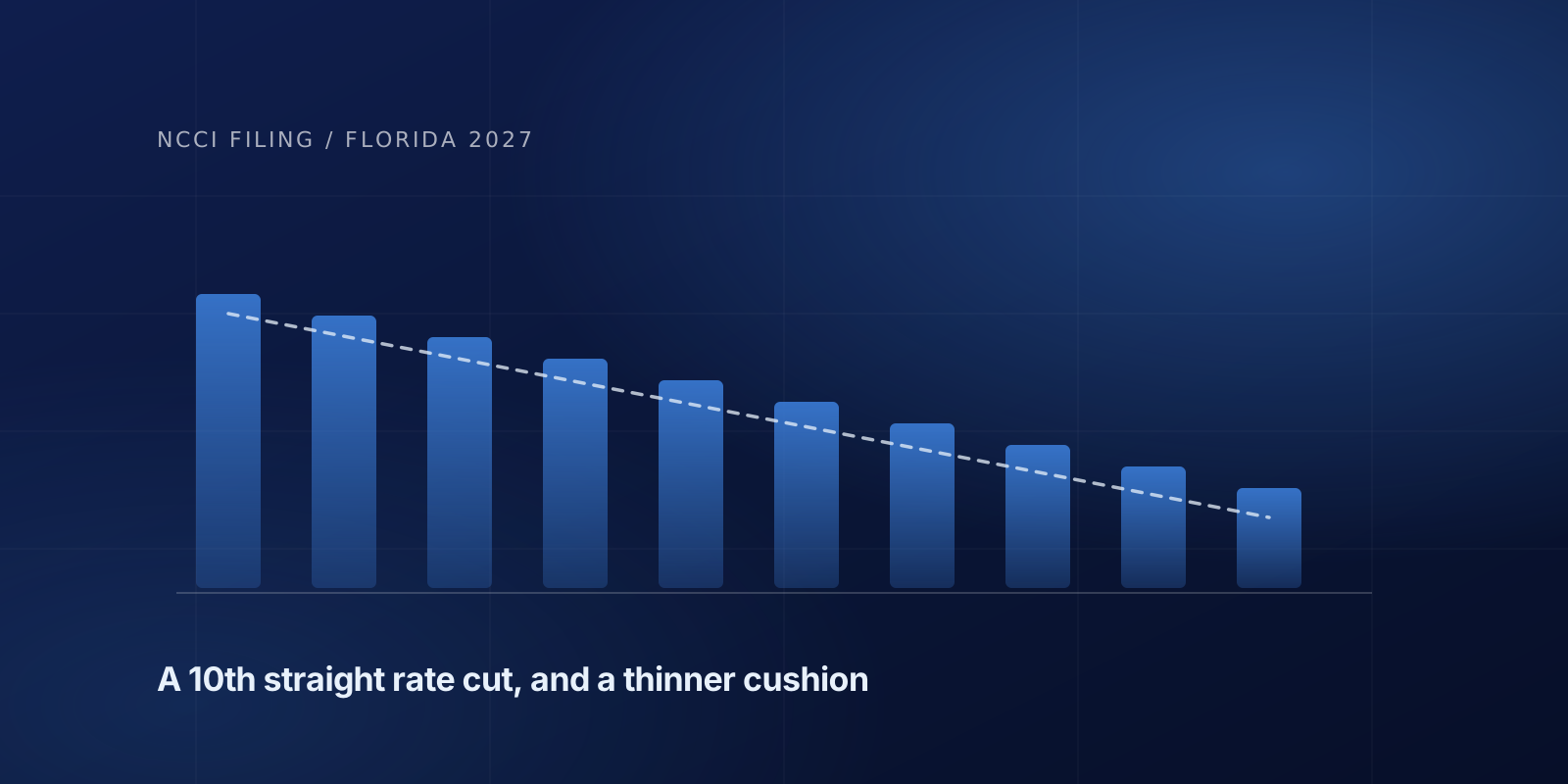
Florida workers comp rates are set to fall 7.4% on average in January 2027, a tenth straight cut. What that leaves behind for payroll accuracy at audit.