Premium audit usually gets measured on one thing: did the audits get done. Completion rate, maybe accuracy complaints, maybe cost per audit.
Cycle time rarely makes the list. It should, and the reason has nothing to do with vendor management. It's that audit turnaround quietly sets the quality of the exposure data your underwriters are pricing renewals on, and most carriers have never looked at the two calendars side by side.
The two clocks don't line up
Here's the structural problem.
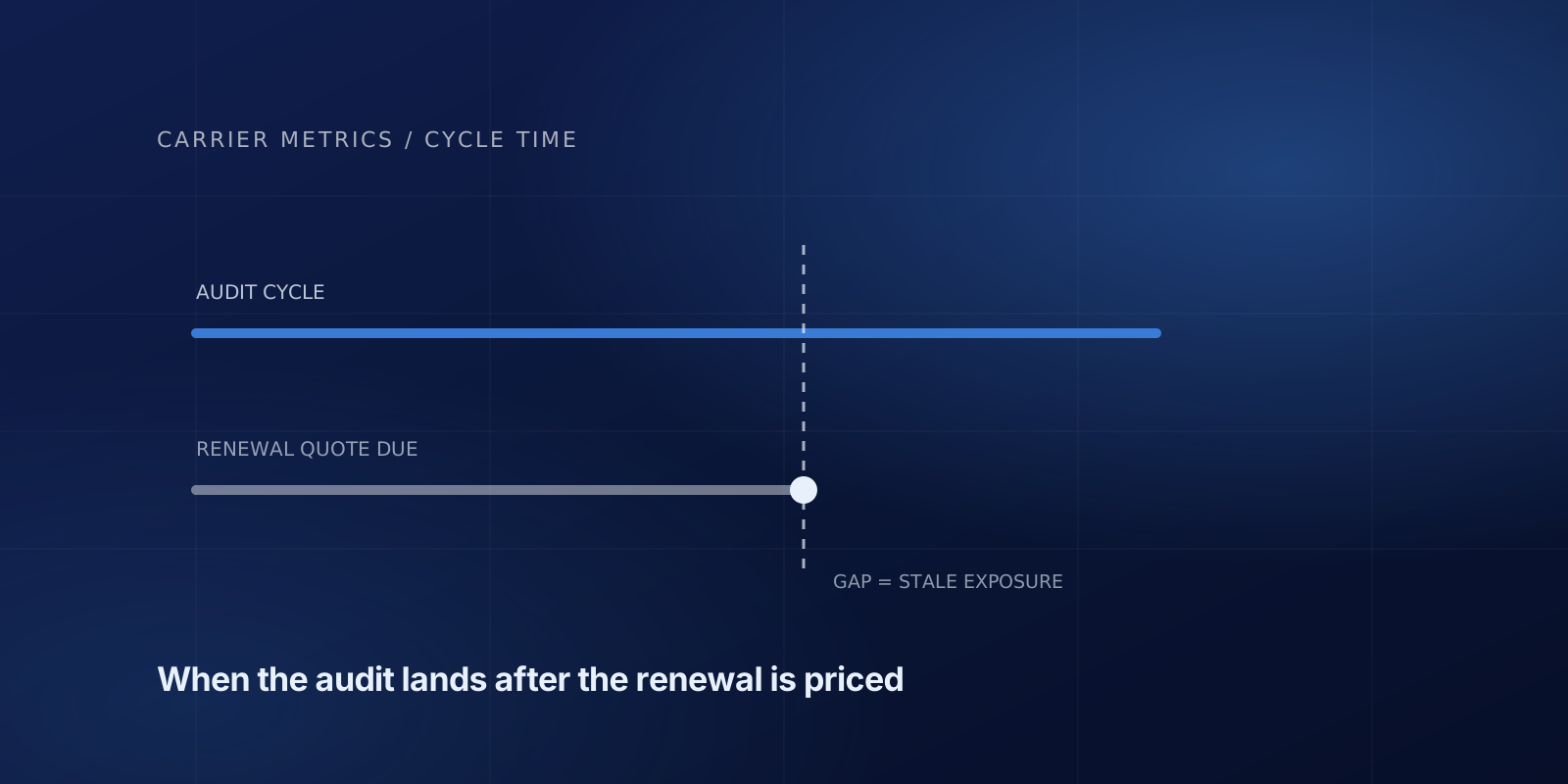
A policy expires. The audit is assigned somewhere in the following weeks. Meanwhile the renewal quote is due 30 to 60 days before the new effective date — which, for most books, means underwriting is making a pricing decision on the renewal before the audit for the expiring term has come back.
When that happens, the renewal gets priced on the same estimated payroll that was already twelve months stale. The audit lands afterward and corrects the historical premium, but it doesn't correct the renewal that was already quoted on the old number.
So a slow audit doesn't just delay a receivable. It exports bad exposure data forward into the next policy term, where it does damage for another twelve months before anyone catches it.
Why the margin for this got thinner
For most of the last decade, falling loss costs absorbed a lot of imprecision. That's changing. NCCI's 2026 State of the Line reported a calendar-year combined ratio of 91% for 2025, up from 86% the year before, with medical and indemnity severity each rising 4% and reserve redundancy narrowing from roughly $16 billion to $14 billion.
The line is still profitable. It's the twelfth consecutive year. But the cushion that used to swallow exposure-capture errors is measurably smaller than it was, and the direction of travel is consistent.
When the cushion shrinks, the premium base has to be right. The premium base is set at audit.
What actually drives cycle time
Audit duration is mostly not driven by how long the audit takes to perform. Reconciling payroll, reviewing classifications, and documenting calculations is a few days of work once complete documents are in hand.
Almost all the variance sits upstream, in document collection. And document collection time is mostly a function of how clearly the insured was told what to send.
That's a fixable problem, and it's fixable with process rather than headcount:
Ask for everything in the first request. Contractor lists and certificates of insurance especially. An audit that discovers a $90,000 uninsured subcontractor in week four restarts a conversation that should have happened in week one.
Give insureds provider-specific instructions. "Send a payroll report" produces the wrong export most of the time. "In QuickBooks Online, run Payroll Summary by Employee for these dates, export to Excel" produces the right one. Short provider-specific walkthroughs for ADP, QuickBooks Online, and QuickBooks Desktop pay for themselves quickly.
Have a documented outreach cadence. Not ad hoc follow-up. A defined sequence with defined intervals, and a defined point at which non-compliance gets flagged back to the carrier.
Fail fast on non-responders. The value of knowing an insured won't cooperate is highest early. Flag it while there's still time to act on it, not at the end.
What to actually measure
If you want audit performance on a scorecard, four numbers tell you most of what you need:
Assignment to first contact. How long before the insured hears from anyone. This should be a day or two, and when it isn't, everything downstream slides.
First contact to complete documents. The real bottleneck. This is where process quality shows up.
Documents to delivered report. The only interval that's actually fieldwork.
Percentage delivered before the renewal quote date. The one that matters most and gets measured least. This is the number that tells you whether your audits are informing renewals or arriving after them.
That last metric is worth building even if it's uncomfortable the first time you run it. Most carriers who look find the figure lower than they expected.
The trade nobody should make
There's an obvious tension here: pushing cycle time hard can produce fast audits that are wrong, and a wrong audit is worse than a slow one. It generates disputes, it burns the insured relationship, and it usually ends up being redone.
The way out isn't choosing between them. It's recognizing that most audit delay is collection friction rather than analysis time, and collection friction is exactly the part you can compress without touching the quality of the work. Nothing about clearer document instructions makes a classification decision less accurate.
Cut the waiting, not the auditing.
The four metrics above are worth building even if the first run is uncomfortable. Most of the fix lives in the document request, not in the audit itself.
Frequently asked questions
Why does premium audit turnaround matter to carriers?
Renewals are usually quoted before the expiring term's audit comes back, so a slow audit means the renewal is priced on stale estimated payroll and the error carries forward for another twelve months.
What metrics should carriers track for premium audit?
Assignment to first contact, first contact to complete documents, documents to delivered report, and the percentage of audits delivered before the renewal quote date. The last one matters most and is measured least.
What causes premium audit delays?
Document collection, not analysis. Unclear document requests, generic payroll instructions, and the absence of a defined outreach cadence account for most of the variance in cycle time.