Worker classification has been unsettled at the federal level for years now. In February 2026 the Department of Labor proposed another revision to the standard for deciding whether someone is an employee or an independent contractor under the Fair Labor Standards Act — the latest turn in a rule that has been rewritten by successive administrations.
Meanwhile the states aren't waiting. Virginia's HB 238 creates a presumption that a worker is an employee unless they meet the strict IRS independent contractor criteria, and extends general contractor responsibility for unpaid wages down the chain. The litigation volume tells the same story: more than 5,700 new FLSA lawsuits were filed in federal court in 2025 alone.
Here's what nobody sends a memo about. Long before any of that produces a wage claim or a DOL investigation, the classification question shows up somewhere much more routine — your workers' compensation premium audit.
Two different tests, one set of consequences
This trips up a lot of business owners, so it's worth separating carefully.
The DOL's test decides whether you owe someone overtime and minimum wage. The IRS test decides how you report their income. Neither of those is the test your premium auditor applies.
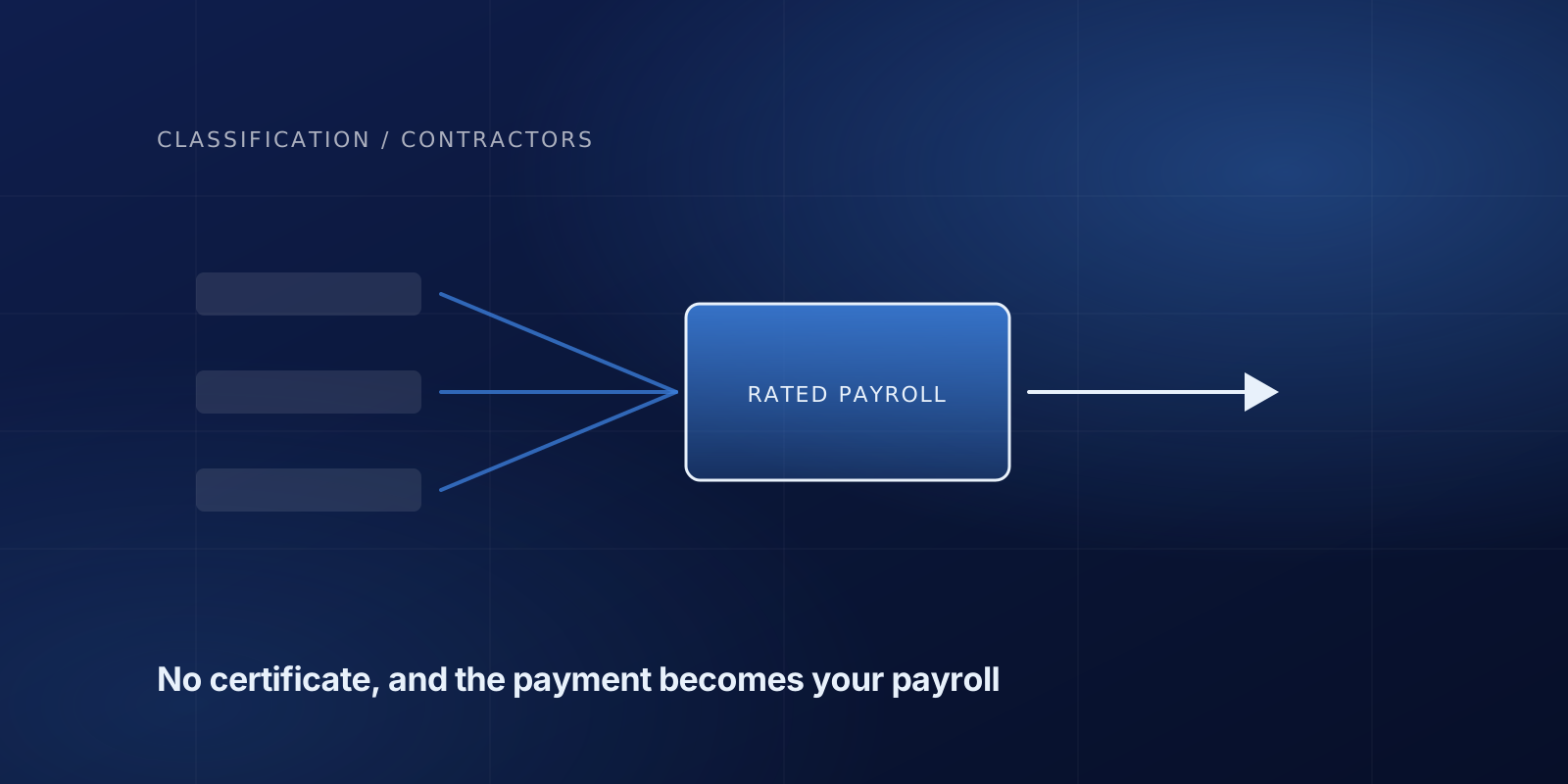
For workers' compensation, the question is narrower and, frankly, more brutal: did this person have their own workers' compensation coverage while they worked for you? In most states, if the answer is no, the carrier can treat what you paid them as your payroll — regardless of how the relationship is structured, what the contract says, or whether they're a legitimate independent business by every other measure.
You can be completely correct under the FLSA and still pay premium on a contractor. The tests aren't asking the same question.
Why this is the most expensive line in an audit
The math is unforgiving. A subcontractor you paid $80,000 with no certificate of insurance doesn't cost you a percentage. It becomes $80,000 of exposure rated at your class code. On a construction code, that can land in five figures of additional premium on one relationship.
And it compounds. If the same arrangement ran for three policy periods before anyone looked closely, you're not having one conversation. You're having three.
What makes this worth writing about now is that the broader legal environment is pushing in the same direction. When a state adopts a presumption of employment, when general contractors become responsible for subcontractor wage obligations, when FLSA filings climb — the practical effect is that arrangements which sat comfortably in a gray area for years are being pulled into it from several directions at once.
The premium audit is usually the first one to arrive.
What actually protects you
Certificates of insurance, collected at hire. Not at renewal. Not when the auditor asks. When they start work. The certificate needs to cover the dates they actually worked for you, and a current certificate does not prove coverage existed eight months ago.
A tickler for expiring certificates. A subcontractor whose policy lapsed in March is uninsured for everything after March, and you will find out at audit. Someone should own this list.
Written scope, kept with the file. If a contractor's work later gets questioned, what they were hired to do is the fact that matters, and memory is not evidence.
Honesty in the first email. If you know a contractor was uninsured, say so at the start of the audit. It's still a cost. But an expected cost is a much smaller problem than one that surfaces in the final report and turns into a dispute.
For carriers
Two things follow from this.
The first is that contractor exposure is the highest-variance item in most audits, and it responds to process rather than judgment. An audit workflow that asks for the contractor list and the certificates explicitly, in the initial request, captures far more than one that waits for the insured to volunteer them. That single sequencing change is among the highest-yield adjustments available in most audit programs.
The second is that the legal ground is moving unevenly across states. A national book will have risks where the same working arrangement produces different answers depending on where the work happened. That's a classification review question, not a data entry question, and it's worth documenting the reasoning rather than just the result — because the audits that get disputed are the ones where nobody wrote down why.
The honest limitation
Nothing here is legal advice, and it isn't a substitute for it. Whether a specific worker is properly classified under federal or state employment law is a question for employment counsel, and the answer depends on facts that never appear in a payroll report.
The audit question is narrower and more immediate: the certificate either exists or it doesn't. That part isn't ambiguous, and it's the part that can be fixed this week.
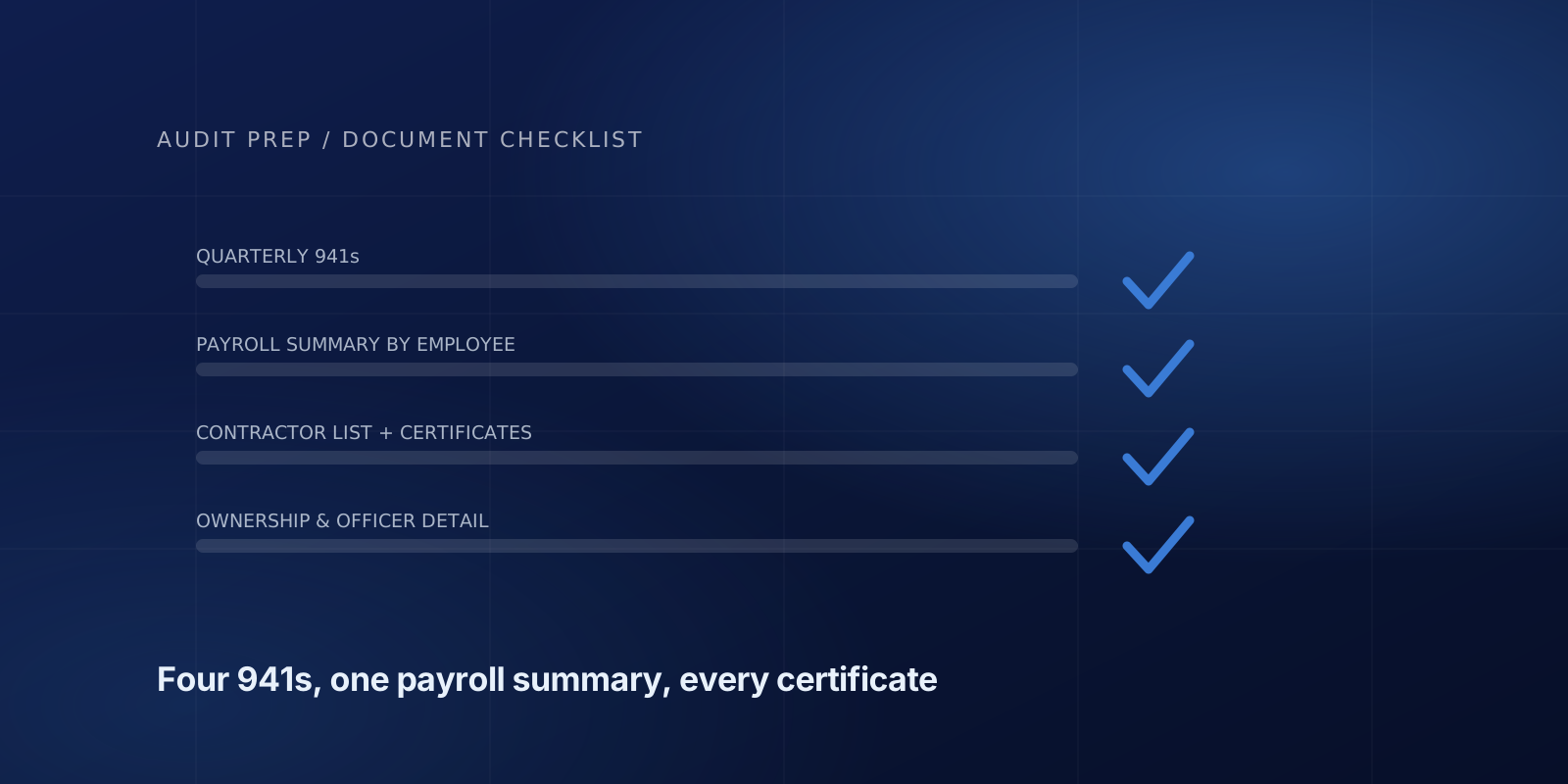
Everything else in the audit is arithmetic. This is the line where a business decision made two years ago shows up as premium, which is why it's worth handling before the notice arrives rather than after. The subcontractor exposure calculator shows what an existing gap is worth, and the audit document checklist covers what to collect.
Frequently asked questions
Does the DOL independent contractor rule affect workers' comp premium?
Not directly. The DOL test decides wage and hour obligations. A premium audit asks a narrower question: whether the contractor carried their own workers' comp coverage for the dates worked. A business can be correct under the FLSA and still be charged premium on a contractor with no certificate.
What is Virginia HB 238?
A 2026 Virginia law that creates a presumption a worker is an employee unless they meet the IRS independent contractor criteria, and extends general contractors' responsibility for unpaid wages down the chain.
How do I avoid being charged for uninsured subcontractors at audit?
Collect a certificate of insurance at hire that covers the work dates, keep a list of expiration dates, keep the written scope with the file, and disclose any contractor you already know was uninsured at the start of the audit.