Sometimes the audit notice arrives during the worst month of somebody's year and it just doesn't get answered. Not out of defiance. It gets buried, and then it gets awkward, and then it's been six weeks.
The instinct is to hope it resolves itself. It doesn't, and the way it fails is worse than the audit would have been. Here's the actual sequence.
First, the carrier estimates your premium for you
Nearly every workers' compensation policy gives the carrier the right to determine your exposure if you don't cooperate with the audit. That's not a threat buried in fine print; it's how the contract is built, because the carrier can't leave a policy permanently un-trued-up.
An estimated audit is not calculated the way a real one is. There is no payroll report to reconcile and no basis for applying the exclusions you'd normally get. Overtime doesn't get its premium portion removed, because nobody knows what the overtime was. Officer caps don't get applied, because nobody knows who the officers are. Split classifications don't happen.
The result is a bill built entirely from assumptions that break in the carrier's favor, because those are the only assumptions available. In many states the estimate is set at a multiple of the policy's estimated annual premium.
Then the non-compliance charge
Many states permit an additional charge specifically for failure to cooperate with the audit — often expressed as a percentage of the estimated annual premium, sometimes doubling it.
This is a separate item from the estimated premium itself. It's a penalty for the non-response, and it exists in the rules precisely because carriers needed a way to make ignoring the audit more expensive than doing it.
Then cancellation, and then it follows you
Failure to complete an audit is a permitted reason for cancellation or non-renewal in most states.
That's where the real damage starts, and it's the part people don't anticipate. A cancellation for audit non-compliance is visible to the next carrier. You are now a business shopping for workers' compensation coverage with a cancellation on your record and an unpaid balance behind it, which is a materially harder conversation than the one you were avoiding.
If you work in construction or any contract-driven trade, you may also be unable to produce a valid certificate of insurance. That can cost you a job while the coverage question is unresolved.
In some states, an unresolved audit balance can follow you to the assigned risk pool, where pricing is not designed to be competitive.
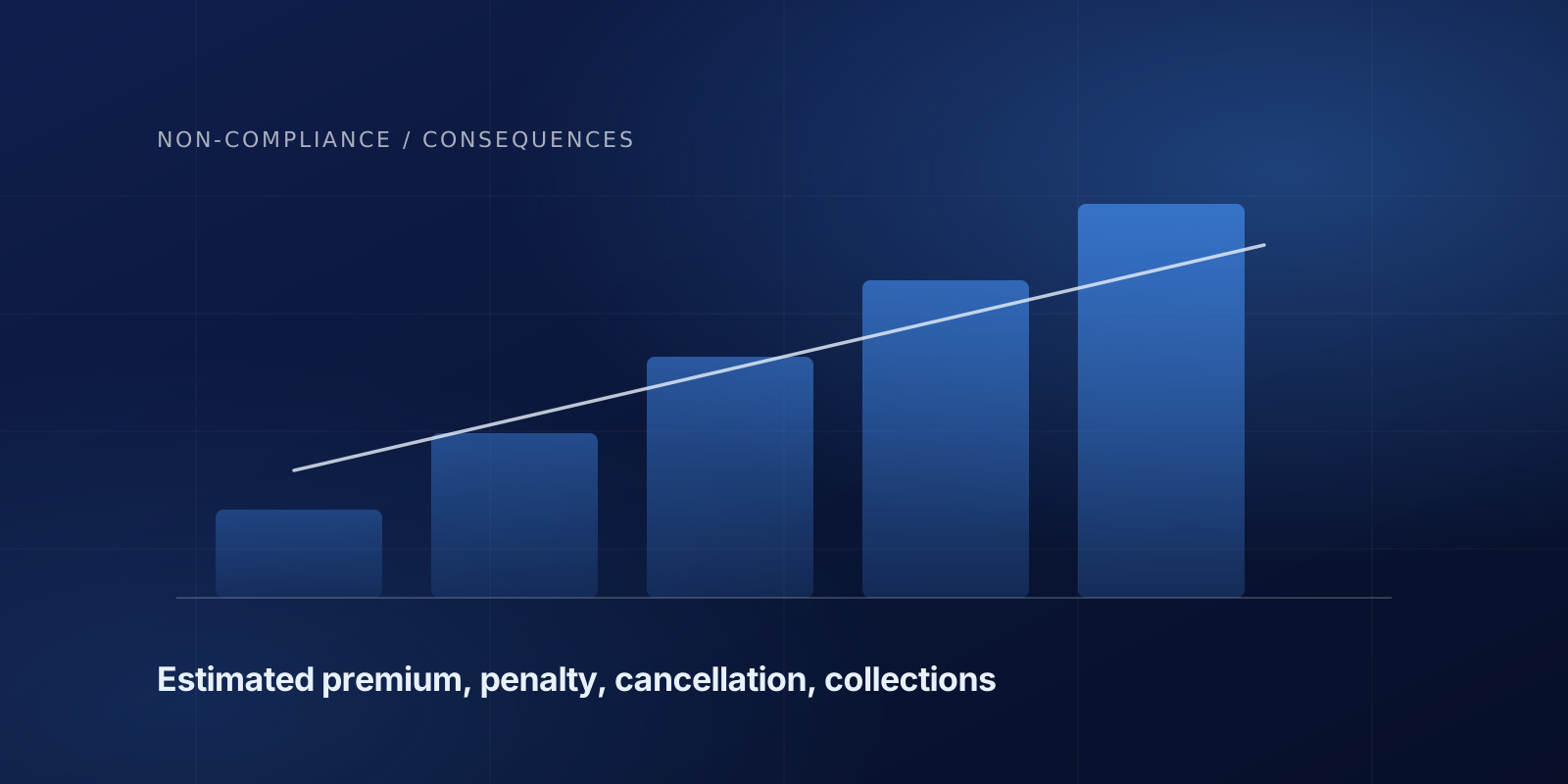
The order this happens in
| Stage | What it costs |
|---|---|
| Audit notice ignored | Nothing yet |
| Follow-up attempts exhausted | Nothing yet |
| Estimated audit issued | Premium calculated on assumptions, no exclusions applied |
| Non-compliance charge added | Additional percentage of estimated premium, where the state allows it |
| Cancellation or non-renewal | Coverage gap, record visible to other carriers |
| Balance to collections | Credit consequences, assigned risk pricing |
Every stage before the estimate is reversible at no cost. After it, you're negotiating.
You can almost always still fix it
Here's the thing worth knowing: an estimated audit is usually revisable if you produce the records. Carriers generally prefer an accurate number to a punitive one, because an accurate number is the one that holds up.
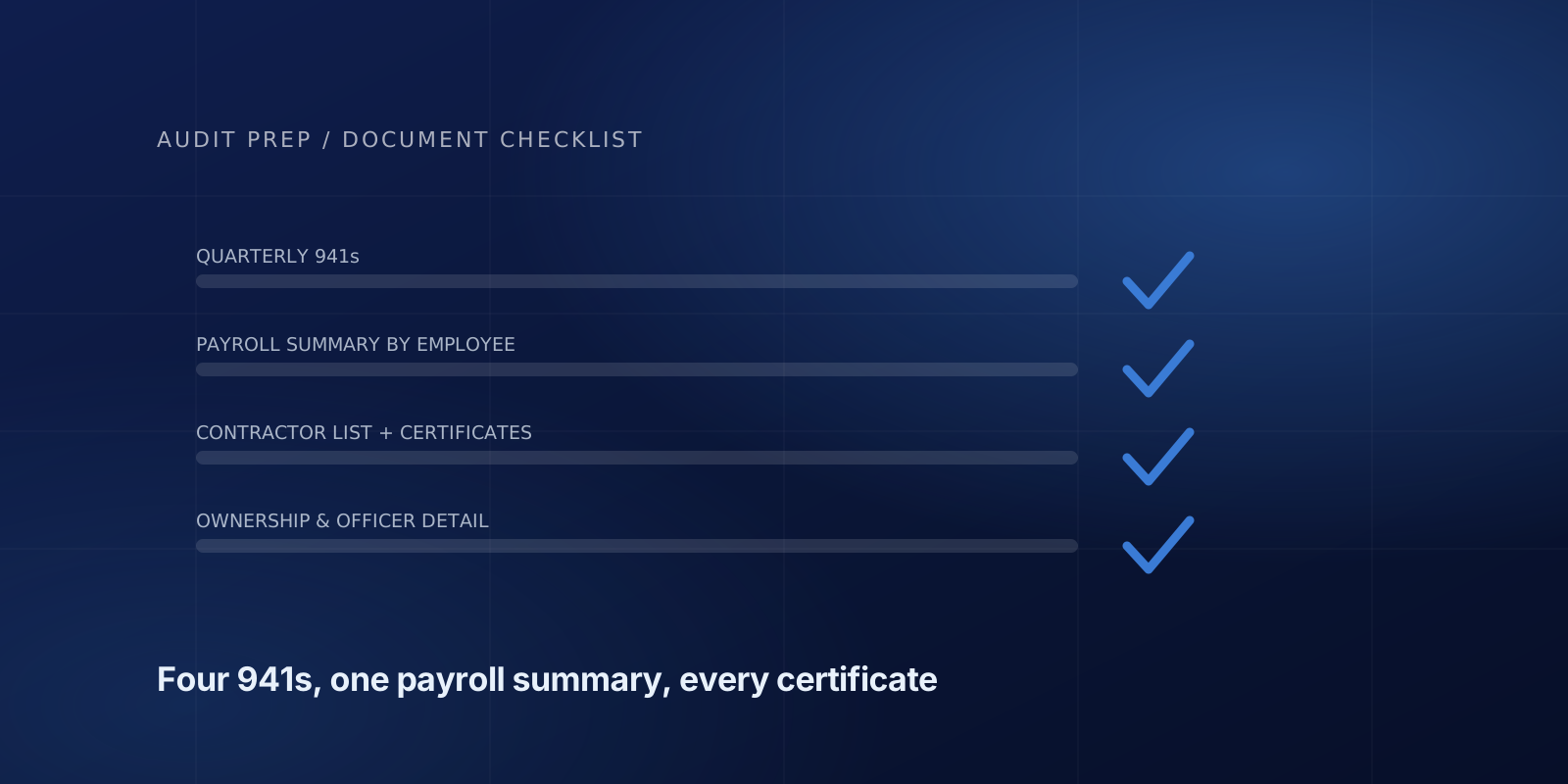
Send the payroll summary and the 941s even if you're past the deadline. Even if the estimated bill has already arrived. Late is not the same as refused, and documents that show up after the estimate can still support a revision.
What doesn't work is arguing about the estimate without providing records. There's nothing to recalculate from, and the estimate stands by default.
If you're stuck for a real reason
There are legitimate reasons an audit stalls. Your bookkeeper left and took the system knowledge with them. You're mid-transition between payroll providers. The records are with an accountant who isn't responding. There's a dispute with a former partner over access to the books.
All of those are workable, and none of them are the situation the penalty structure was designed for. But they're only workable if you say so. A two-line email explaining the delay and giving a realistic date keeps the audit open and keeps the estimate off the table. Silence is what triggers the sequence above, not difficulty.
Auditors deal with messy record situations constantly. It's most of the job. The one thing that can't be worked around is silence.
The short version
Ignoring the audit doesn't avoid the premium. It replaces a calculated premium with an assumed one, adds a penalty on top, and puts your coverage and your record at risk — all to avoid a task that takes most businesses about an hour.
If an audit is sitting unanswered right now, send whatever exists. Partial and late beats absent by a wide margin, and the document checklist is a reasonable place to start.
Frequently asked questions
What happens if you don't complete a workers' comp audit?
The carrier estimates your premium from assumptions with no exclusions applied, many states allow a non-compliance charge on top, and failure to complete an audit is grounds for cancellation or non-renewal in most states.
What is a workers' comp audit non-compliance charge?
An additional amount many states permit a carrier to add when an insured fails to cooperate with the audit. It is typically a percentage of the estimated annual premium and is separate from the estimated premium itself.
Can an estimated workers' comp audit be revised?
Usually, if you produce the payroll records and 941s, even late. What does not work is disputing the estimate without supplying documents, because there is nothing to recalculate from.