
"Payroll" sounds like it should be one number. In a workers' compensation audit it isn't, and the gap between what people assume counts and what actually counts is where a lot of money quietly changes hands.
The technical term is remuneration. It's broader than wages in some places and narrower in others, and the rules vary by state. What follows is the general shape of it. Your state may differ on specific items, which is exactly why the auditor asks rather than assumes.
The default is: it counts
Start from the assumption that money paid to a worker is included, then subtract the specific exclusions. That's the direction the rules run, and people who start from the opposite direction consistently under-report.
Included in almost every state:
- Gross wages and salary, before any deductions
- Commissions and bonuses
- Holiday, vacation, and sick pay
- The straight-time portion of overtime
- Payment for piecework or by the job
- Tool or vehicle allowances that aren't tied to documented expenses
- The market value of housing, meals, or lodging provided as compensation
- Employee contributions to a 401(k) or Section 125 plan, since those came out of gross pay
That last one surprises people every time. Money an employee deferred into their retirement plan was still wages. It's included.
The exclusions worth knowing
The premium portion of overtime. This is the big one. In most states, if someone earns $30 an hour and is paid $45 for overtime, only the $30 base rate counts toward exposure. The extra $15 comes out.
The catch is documentation. The exclusion is available only if your payroll records separate overtime from regular wages. If your report shows one combined gross figure, there's nothing to subtract from, and the full amount gets rated. There's no way to back into it, and an auditor isn't permitted to estimate it in your favor.
This single reporting choice is worth real money on any payroll with meaningful overtime. Check your report format before you send it.
Severance pay. Generally excluded.
Tips reported by the employee. Usually excluded, though states vary.
Reimbursed business expenses. Excluded when they're documented actual expenses. Flat allowances with no receipts behind them are generally treated as wages.
Employer contributions to benefit plans. The employer's share of insurance premiums, pension contributions, and similar benefits is excluded. Only the employee's own deferrals are counted.
Third-party sick pay. Excluded when paid by an insurer or a third party rather than by you.
Owners and officers are their own category
This is the area where state rules diverge most, and where assumptions cost the most.
Corporate officers are generally covered by default and can often elect out. Sole proprietors and partners are generally excluded by default and can often elect in. LLC members fall in different places depending on the state and how the LLC is taxed.
On top of that, most states apply minimum and maximum payroll amounts to included officers. An officer drawing $500,000 usually isn't rated on $500,000 — they're rated at the state cap, which may be a fraction of that. An officer drawing $15,000 may be rated at a state minimum that's higher than what they actually took.
Tell your auditor each officer's name, title, ownership percentage, actual pay, and whether they elected in or out. Guessing here produces a number that's wrong in a direction nobody can predict.
Splitting one employee across class codes
If an employee genuinely performs work in more than one classification, some states allow their payroll to be divided between codes. Some don't. Where it's allowed, the division has to be supported by actual records — time cards, job costing, a daily log — showing how the time broke down.
An estimate doesn't qualify. Neither does "she spends about half her time in the office." Without records, most states require the entire payroll to be assigned to the highest-rated classification the employee worked in.
If you have people who split duties, start keeping that time detail now. It won't help this audit, but it will help the next one, and the difference between the highest-rated code and a split allocation is usually the largest single swing available to you.
The pattern behind all of it
Nearly every exclusion above depends on the same thing: your records being detailed enough to support it.
Overtime excluded only if it's broken out. Expense reimbursements excluded only if documented. Split classifications allowed only with time records. Officer caps applied only if the auditor knows who the officers are.
Which means the practical answer to "what payroll counts" is partly a question about your payroll system's report settings. A payroll summary that shows regular, overtime, bonus, and commission in separate columns gives you every exclusion you're entitled to. One that shows a single gross number gives you none of them.
Run the detailed version. It's the same report with more boxes checked.
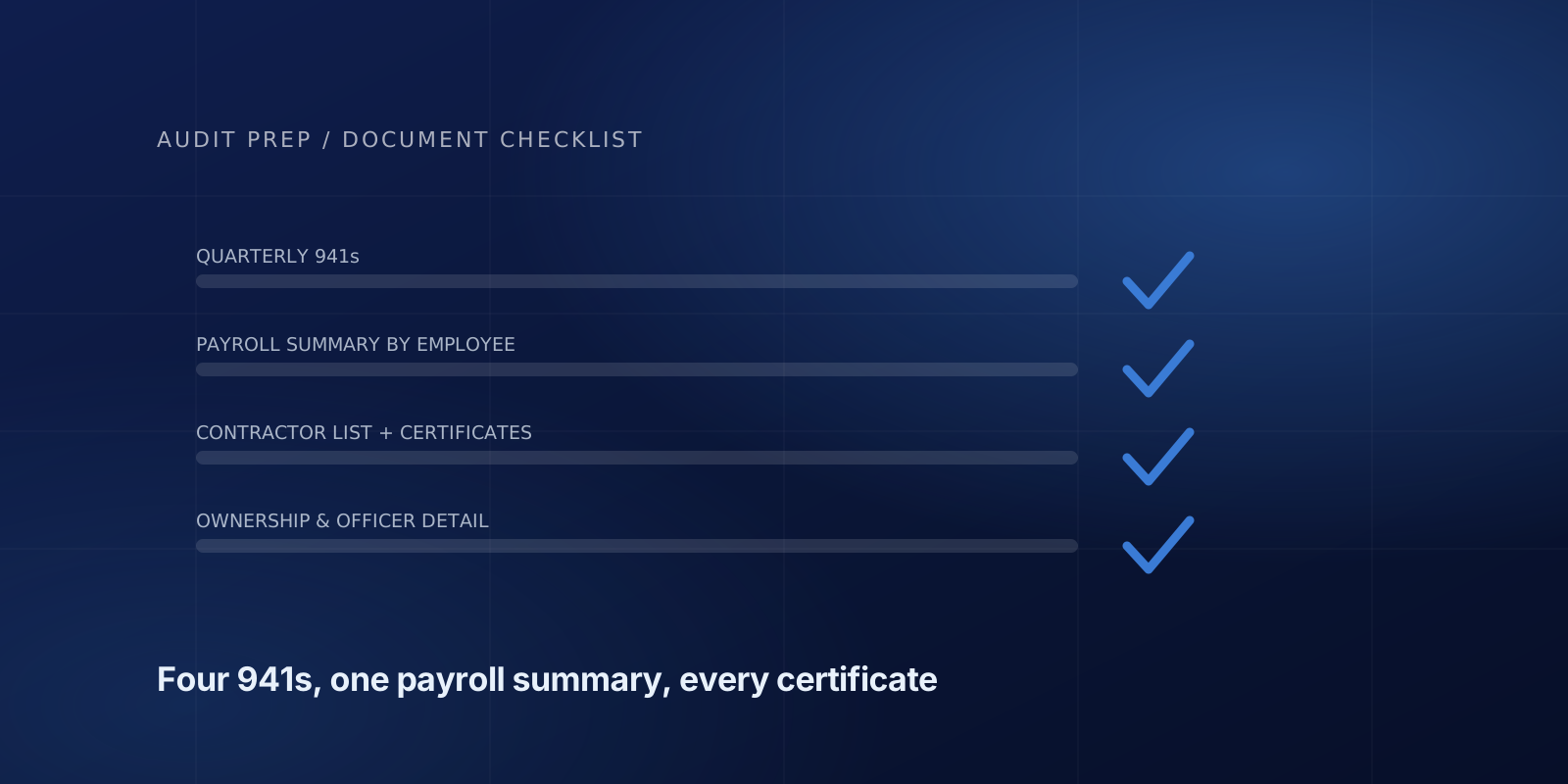
Not sure whether a particular item belongs in the audit basis? Your state's rating bureau publishes the inclusions and exclusions that apply, and the audit notice will normally name the manual it follows. The audit document checklist covers what to have ready.
Frequently asked questions
What payroll is included in a workers' compensation audit?
Gross wages, salary, commissions, bonuses, holiday and vacation pay, the straight-time portion of overtime, and employee contributions to 401(k) and Section 125 plans. The default is that money paid to a worker counts, and specific exclusions are then subtracted.
Is overtime included in workers' comp payroll?
The straight-time portion is. In most states the premium portion, the extra half of time-and-a-half, is excluded, but only when payroll records separate overtime from regular wages.
Is owner or officer pay included in a workers' comp audit?
It depends on entity type and state. Corporate officers are generally included by default and can elect out; sole proprietors and partners are generally excluded and can elect in. Included owners are usually rated at a state minimum or maximum rather than actual pay.
What payroll is excluded from a workers' comp audit?
Typically severance pay, tips reported by the employee, documented business expense reimbursements, employer contributions to benefit plans, and third-party sick pay. The specifics vary by state.