"Virtual audit" sounds like a euphemism for a lighter audit. It isn't, and the suspicion is fair enough that it's worth explaining what actually changes and what doesn't.
What changes is the document handoff. What doesn't change is any of the analysis.
The three audit types, briefly
Physical. An auditor visits the insured's office and works through records on site. Historically the default, still appropriate for large or complicated risks.
Telephone. The insured is interviewed by phone and reports figures verbally, sometimes mailing documents afterward. Fast and cheap. It's also the type most dependent on the insured's own understanding of what counts as payroll, which is not always a safe assumption.
Virtual. The insured sends native digital exports — payroll reports, tax filings, ledgers — through a secure channel, and the auditor works from the source documents themselves.
The distinction that matters isn't remote versus in person. It's whether the auditor is working from primary documents or from someone's summary of them. A virtual audit works from primary documents. A telephone audit often doesn't.
What actually happens
Assignment and kickoff. The policy comes over, and the insured gets a request naming the specific documents needed for their situation. Not a generic list. If they run ADP, the instructions say where in ADP to find the report.
Document collection. The insured pulls the exports and uploads them. This is the part that determines the timeline, and it's the part most worth optimizing. Provider-specific walkthroughs for ADP, QuickBooks Online, and QuickBooks Desktop exist because a generic request produces the wrong export more often than the right one.
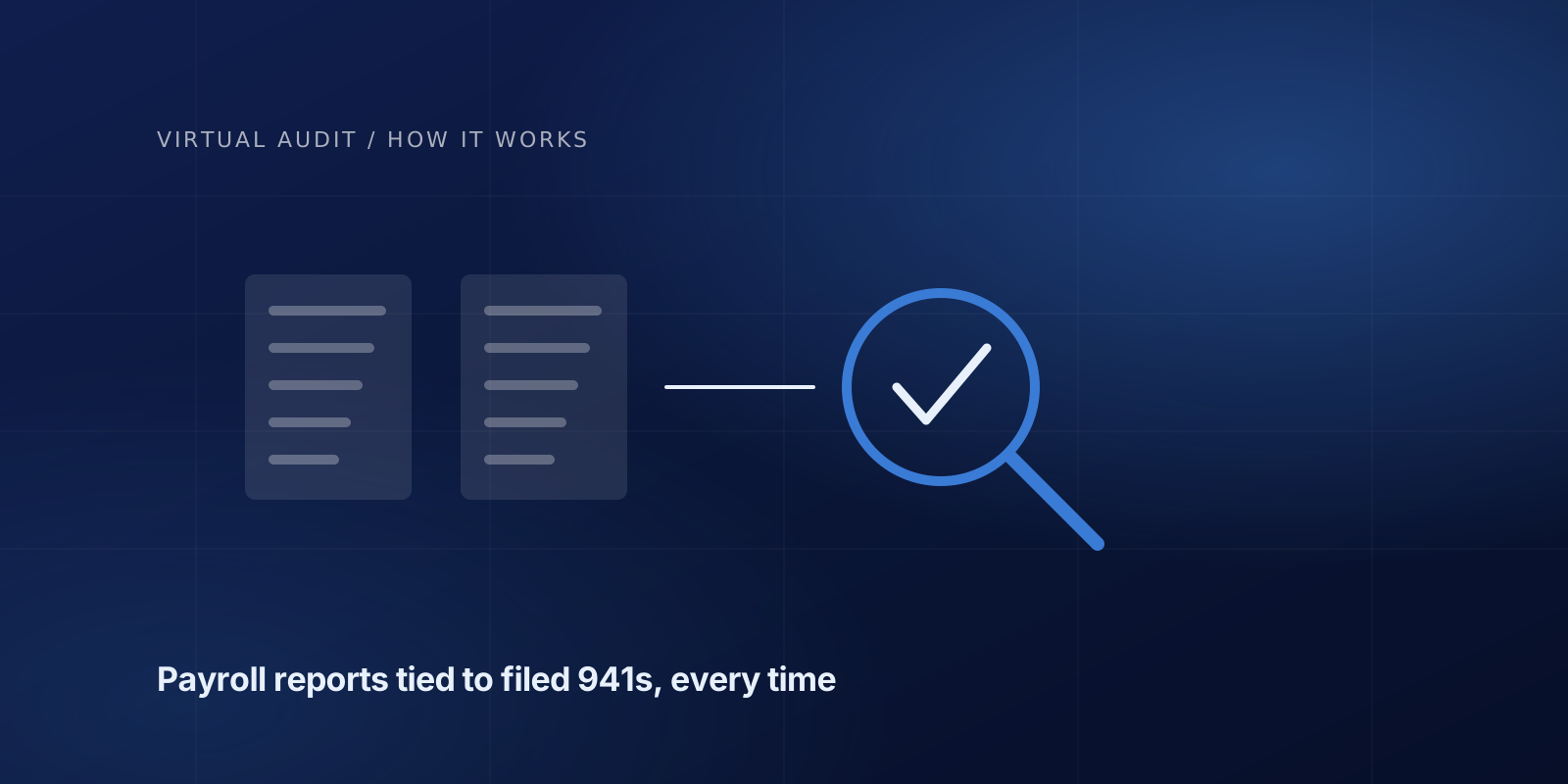
Reconciliation. Payroll reports get tied to the quarterly 941 filings. When those two agree, the payroll figure is established. When they don't, the difference gets investigated — and this is where being remote is an advantage rather than a compromise, because both documents are sitting in front of the auditor in their original form instead of being read aloud over a phone.
Classification review. Employees get assigned to class codes based on their actual duties, with the reasoning documented. Contractor payments get tested against certificates of insurance.
Calculation and delivery. Exposure is calculated, exclusions applied, and a standardized report goes to the carrier with the payroll reconciliation, class-code breakdown, supporting documents, and auditor notes attached.
From complete documents to delivered report is typically a matter of days.
The audit trail is the real difference
The advantage that gets undersold is the one nobody notices until they need it.
In a virtual audit, every figure in the final report traces to a file the insured actually sent. The payroll number came from this export. The contractor treatment came from this certificate, or the absence of one. The classification came from these job titles.
Two years later, when someone questions a number — a new broker, an acquiring carrier, a regulator, the insured themselves — the chain is intact and time-stamped. Nobody is reconstructing what an auditor saw on a laptop in a conference room in 2024.
Disputes resolve faster when the source document is already attached. Most of the disputes that drag on aren't disagreements about the rules; they're disagreements about what the records said.
When a physical audit is still the right answer
Worth saying plainly rather than pretending otherwise.
Some records aren't digital. Businesses running on paper time cards, handwritten job tickets, or a filing cabinet of subcontractor agreements are genuinely better served by someone on site.
Very large or structurally complex risks — multiple entities, many locations, heavy inter-company allocation — sometimes need the kind of open-ended questioning that works better face to face.
And some situations call for physical verification of operations rather than payroll. If the question is what the business actually does, not what it paid, looking at it is the answer.
Anyone claiming virtual works for every risk is selling. It covers the large majority of standard commercial audits well. It doesn't cover all of them.
What businesses notice
Two things, consistently.
The first is that nobody has to be in the office. Scheduling an on-site audit around a small business owner's actual availability is a real cost, and rescheduling is a real cost again.
The second is more of a relief than a benefit: nobody has to know what a 941 is. Good step-by-step instructions cover the mechanics, so the business follows steps rather than interpreting an auditor's terminology in real time. That's better for the insured, and it's better for accuracy, because the most common source of bad audit data is someone answering a question they didn't fully understand.
The useful question isn't whether virtual audits are better than physical ones. It's which risks in a given book actually need someone on site, and that list is usually shorter than it looks.
Frequently asked questions
What is a virtual premium audit?
A workers' compensation premium audit conducted remotely, where the insured supplies native digital payroll and tax records through a secure channel and the auditor works from those source documents directly.
Is a virtual audit less thorough than a physical audit?
No. What changes is the document handoff, not the analysis. A virtual audit works from primary documents, whereas a telephone audit often works from a spoken summary, which is the less reliable method.
When is a physical audit still the better choice?
When records are not digital, when the risk is structurally complex across multiple entities or locations, or when the question is what the business actually does rather than what it paid.