Workers' comp estimated payroll has quietly become the most consequential number on the policy. NCCI's 2026 State of the Line put private carrier net written premium essentially flat at $41.6 billion, a decrease of 0.2%, which made workers' compensation the only major property and casualty line to see premium fall. Approved NCCI filings are expected to reduce written premiums by a further 5.0% on average from 2025 to 2026.
Meanwhile medical claim severity and indemnity claim severity each rose 4% in 2025, against a 2% drop in lost-time claim frequency. Costs are climbing and price is falling. The number holding the difference together is exposure, and exposure is a guess made twelve months before anyone checks it.
Why does workers' comp estimated payroll matter more in a soft market?
Because rate is no longer available as a correction.
The line is posting a 91% calendar year combined ratio against 93% for property and casualty overall, which is the profile of a line carriers are competing for rather than repairing. Underwriters in that position do not price their way out of an exposure problem. They absorb it and look to volume.
That leaves the exposure base. And in most operations the exposure base is set at binding by someone reading last year's audited payroll out of a system field and rolling it forward unchanged.
In a flat-wage environment that is defensible. When wages are rising it builds a structural shortfall into the book, because last year's audited payroll is by definition a year behind the wage growth that has happened since. The shortfall is invisible at binding, uniform across the book, and it surfaces one account at a time twelve months later.
The average conceals a spread of 37 points
The 5.0% figure is a countrywide average of approved filings. The underlying state changes range from a 15.6% decrease to a 21.6% increase.
So a multistate program is not experiencing one market. It is experiencing several, and an estimate methodology calibrated to "rates are coming down" is wrong in the states where they are going up.
California is the clearest case. The Insurance Commissioner approved advisory pure premium rates averaging $1.65 per $100 of payroll for policies effective on or after September 1, 2026, roughly 10.4% above the prior year's approved average, in a decision issued July 10, 2026. The drivers were increased frequency of cumulative trauma claims along with higher medical costs and allocated loss adjustment expenses.
Cumulative trauma is what makes California move differently. Such claims reached about 26% of California indemnity claims in preliminary 2024 data, up from a 13% share in 2012, and the total pure premium cost attributable to them has more than doubled since 2021. They also behave unlike other claims once the employment ends: 58% of cumulative trauma claims in accident years 2022 through 2024 were filed after employment ended, up from 44% in a comparable survey of 2013 through 2015, and 99% of those post-termination claims involved litigation.
A claim type that arrives after the worker has left is a claim type an exposure estimate made at binding was never going to anticipate.
What the shortfall costs, beyond the timing
Uncollected premium is the obvious cost and the least interesting one, because the audit does eventually find it.
The expensive part is what a large additional premium does to everything around it. An insured who budgeted from the billed instalments receives a lump sum they did not plan for, and a surprise of that shape produces a dispute far more often than the same dollars spread across the term would have. Disputed audits consume staff time on both sides and they age. A receivable that is contested is a receivable that is not collected, and a book with a wide gap between estimated and audited payroll generates those at volume rather than one at a time.
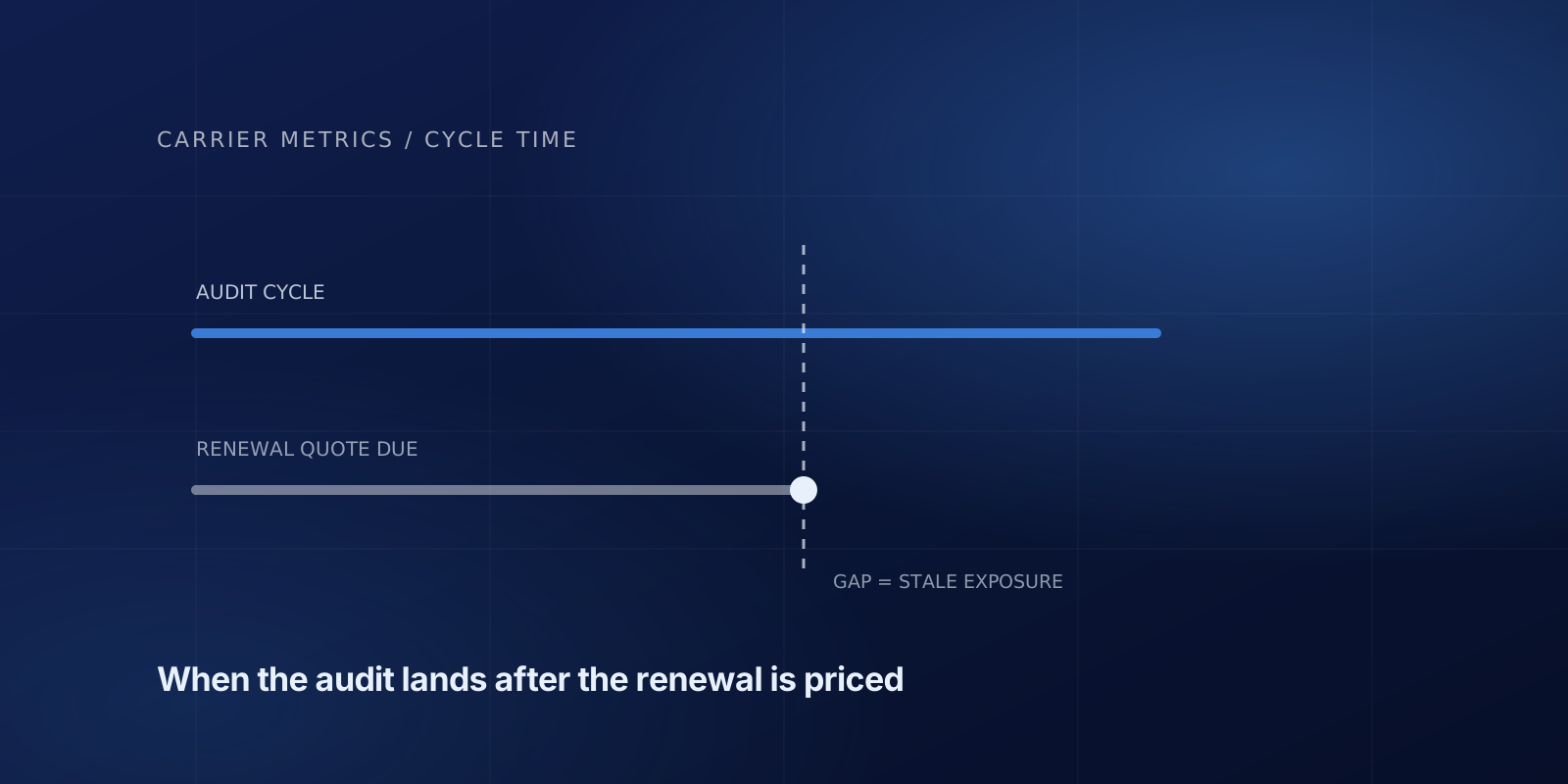
It also corrupts the renewal. If the audit lands after the renewal has been quoted, the renewal is priced off the stale estimate too, and the error compounds into a second term. That timing problem is why audit turnaround belongs on a carrier scorecard rather than in an operations report nobody reads.
And it distorts the view from inside. An account written at understated exposure shows a loss ratio computed against premium that was never right. Segment profitability built on that denominator is built on a number the audit is about to change.
What to change
Three things are tractable inside an underwriting operation.
Stop rolling payroll forward flat. If the estimate is populated from the prior audit without an adjustment, it is low by roughly the wage growth in that class and geography. Applying an explicit factor and recording it makes the assumption reviewable instead of invisible.
Measure the gap as a metric rather than an anecdote. The distribution of audited payroll over estimated payroll, by segment and by producer, shows where estimates are systematically low. A book where that ratio clusters above 1.10 is collecting its premium a year late by design.
Use mid-term reporting where exposure moves fast. For an account in a growth phase, an estimated premium fixed at binding for twelve months is a forecast nobody revisits. Payroll reporting endorsements exist for this, and they turn an audit surprise into a billing adjustment.
None of that changes what an account ultimately owes. The audit basis is the audit basis, and actual payroll is actual payroll. What it changes is whether the money arrives in instalments the insured expected or in a bill they did not, and that distinction decides how much of it gets collected. The 2027 filings continue the split rather than resolving it, so the estimate is not going to get easier next year.
Frequently asked questions
What is workers comp estimated payroll?
The payroll figure recorded at binding, used to calculate the deposit premium billed across the policy term. It is an estimate of exposure that has not happened yet. The audit replaces it with actual payroll once the term ends, and the difference is billed or refunded.
Why does a stale payroll estimate matter if the audit corrects it?
Because the correction arrives a year late and as a bill rather than as instalments. Premium that should have been collected across the term becomes a lump sum owed by an insured who did not budget for it, which is where disputes and collection problems come from.
What did NCCI's 2026 State of the Line report say about premium?
Private carrier net written premium was essentially flat at $41.6 billion, a decrease of 0.2%, making workers compensation the only major property and casualty line to see premium decline. The calendar year combined ratio was 91%.
Are workers compensation rates falling in every state?
No. Approved NCCI filings are expected to reduce written premiums by an average of 5.0% from 2025 to 2026, but state-level changes range from a 15.6% decrease to a 21.6% increase. The average conceals a spread of more than 37 points.
Why are California's workers compensation rates rising?
Cumulative trauma is a large part of it. Cumulative trauma claims reached about 26% of California indemnity claims in preliminary 2024 data, up from 13% in 2012, and the pure premium cost attributable to them has more than doubled since 2021.