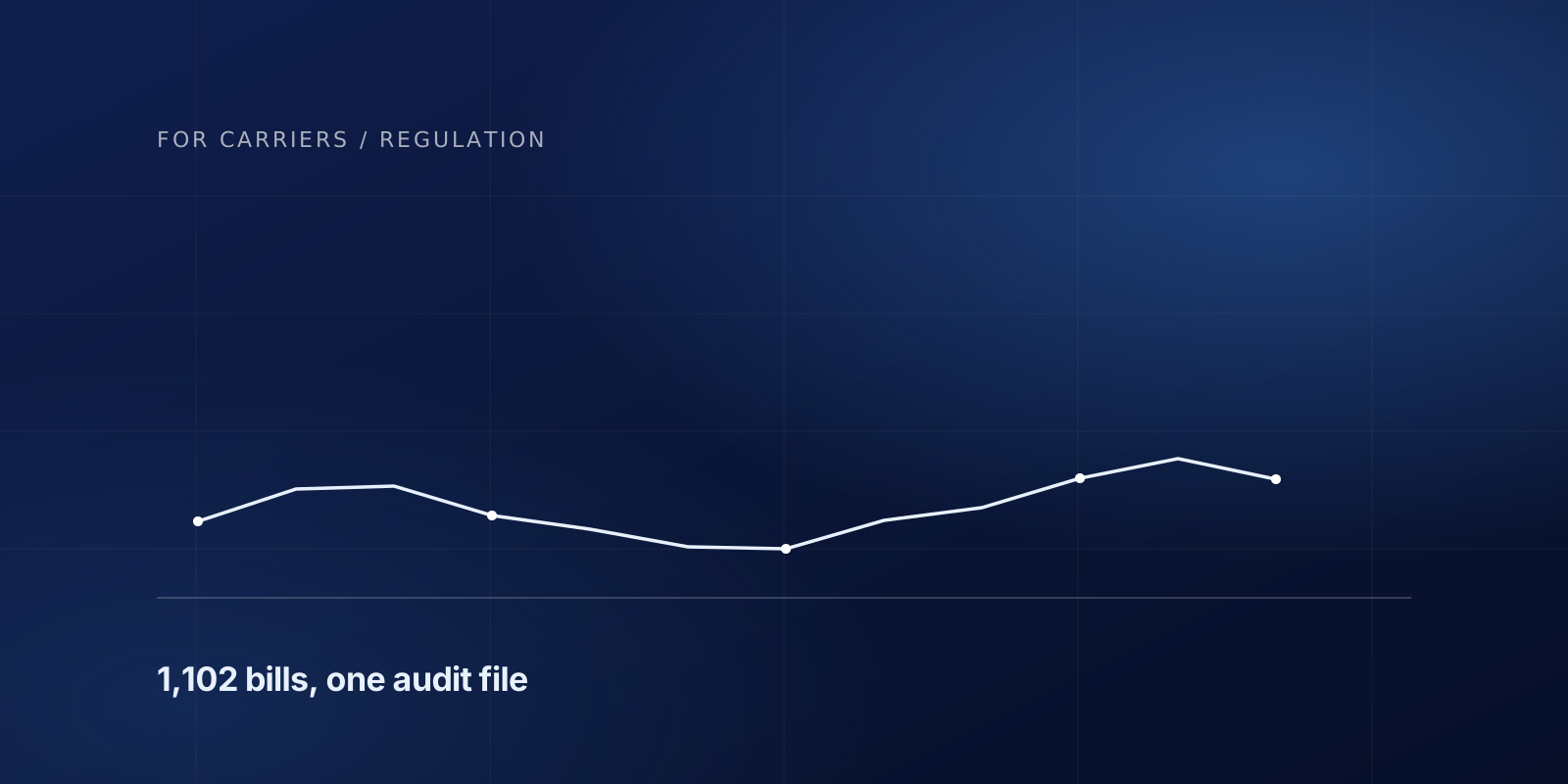
The NCCI legislative and regulatory trends report for 2026 counted 1,102 state and federal bills and 210 proposed regulations with potential workers' compensation implications, of which 167 bills were enacted and 90 regulations adopted. NCCI released it in September 2026, covering countrywide, regional, and individual state trends current as of July 31, 2026. The part worth reading twice is not the volume, it is the shift in what the bills are about.
NCCI describes "a noticeable increase in worker classification-related bills, primarily driven by numerous portable benefits for independent-contractor legislation." Classification bills are not a claims story. They are an exposure story, and exposure is settled at audit.
What did the NCCI legislative and regulatory trends report count?
| Measure | Count as of July 31, 2026 |
|---|---|
| State and federal bills monitored | 1,102 |
| Proposed regulations monitored | 210 |
| Bills enacted | 167 |
| Regulations adopted | 90 |
Louisiana, Oklahoma, and Virginia enacted bills related to worker classification. Congress is considering US HR 6646, the Empowering App-Based Workers Act. The report's other major topic areas run to mental injury, single-payer health insurance, marijuana legalization and reimbursement, and hallucinogens and psychedelics, with most 2026 mental injury legislation centered on who qualifies, what conditions qualify, and which medical professionals may diagnose them.
Those topics move benefit cost. The classification topic moves premium basis. From an audit operation's perspective they are not the same kind of news at all, and only one of them changes what an auditor has to prove.
Why portable benefits reach the premium audit file
NCCI defines portable benefits as "benefits attached to the worker rather than a specific employer, allowing coverage to follow the worker from job to job." Read that as a design goal and it is a benefits question. Read it as a premium question and it is something else: a statutory category of worker who is neither an employee on the payroll register nor a subcontractor carrying their own policy.
Every premium audit resolves each worker into one of a small number of buckets. Payroll subject to a class code. Payroll excluded. An insured subcontractor, evidenced. An uninsured subcontractor, charged. A portable-benefits worker under a state scheme does not obviously belong to any of them, and until a state's implementing regulation says where they go, two auditors looking at the same 1099 file can reach different answers.
That ambiguity is where premium leakage lives. It is also where disputes come from, because an insured who believed a class of workers was carved out by statute will not accept a charge for them quietly. The classification tests themselves are moving at the same time, which has been reshaping the contractor question independently of anything in this report.
Zero-estimated exposure policies are now a named issue
The report's issues spotlight identifies four emerging topics: workers' compensation alternatives, workplace safety, artificial intelligence, and zero-estimated exposure policies.
The last one is the audit department's problem specifically. A policy bound with no estimated payroll is a policy with no meaningful estimated premium to reconcile against, written for an employer who expects no covered employees during the term. Some of those expectations hold. Some do not, and the ones that do not are discovered only by an audit that someone has to decide is worth performing on a minimum-premium policy.
NCCI naming it as an emerging issue is a signal that the volume has grown enough to be visible in countrywide data. For a carrier, the practical question is whether your audit selection rules currently treat a zero-exposure policy as a candidate at all, or as an automatic waiver.
What an audit operation should take from this
Three things are actionable now.
Watch the three enacting states rather than the count. Louisiana, Oklahoma, and Virginia have enacted language that auditors working those states will meet in the field before any national trend settles. The implementing regulations, not the statutes, will decide how a worker gets coded.
Decide the zero-exposure question deliberately. If the current rule is "waive under X premium," that rule was written when these policies were rare. The report says they are not rare anymore.
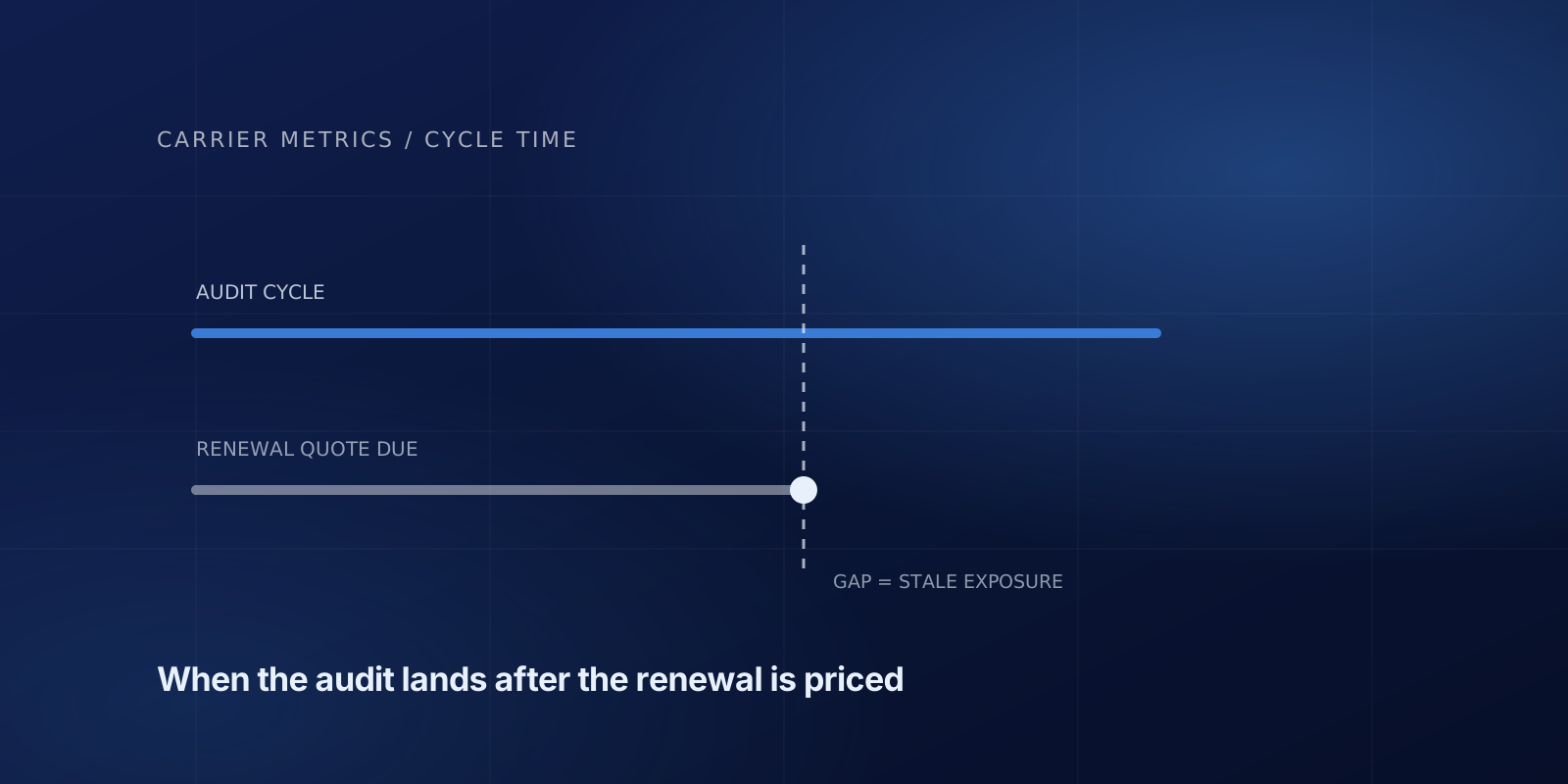
Treat classification volume as a dispute forecast. 1,102 bills monitored and 167 enacted means the ground under class code assignment moves in more jurisdictions this year than last. Audit disputes tend to follow classification changes by about a policy term, which would put the 2026 enactments into audits landing through 2027.
The report is a snapshot as of July 31. The 2027 sessions open in January, and the portable benefits bills that did not pass this year will mostly be back.
Frequently asked questions
What is the NCCI legislative and regulatory trends report?
It is NCCI's annual summary of state and federal legislative and regulatory activity affecting workers compensation. The 2026 edition covers countrywide, regional, and individual state trends as of July 31, 2026, and was released in September 2026.
What are portable benefits in workers compensation?
NCCI defines them as benefits attached to the worker rather than a specific employer, allowing coverage to follow the worker from job to job. Portable benefits bills for independent contractors drove most of the increase in worker classification legislation in 2026.
Which states enacted worker classification bills in 2026?
Louisiana, Oklahoma, and Virginia. At the federal level, Congress is considering US HR 6646, the Empowering App-Based Workers Act.
Should an audit operation act on classification bills that have only just passed?
Not on the statutes themselves. The implementing regulations, not the statutes, decide how a worker gets coded, so the practical step is watching the three enacting states rather than the countrywide bill count. Audit disputes tend to follow classification changes by about a policy term, which would put the 2026 enactments into audits landing through 2027.
What is a zero-estimated exposure policy?
A policy written with no estimated payroll, typically where an employer expects to have no covered employees during the term. NCCI named it one of four emerging issues in the 2026 report.